
When my wife died at the age of 33, Mary Shelley was a natural companion in my journey through grief. Widowed two hundred years before me when Percy Shelley drowned in a boating accident, she, too, had been left with a young son to bring up alone. Not only that, but both of us were separated from family and friends at the time of our bereavements; my wife and I had moved to a new part of the country just six weeks before she died, while Mary had left her support network behind in London in order to follow Percy to Italy. Mary famously wrote the loneliness of her grief into her novel The Last Man (1826), in which Lionel Verney – a portrait of Mary herself – becomes the last surviving human on Earth after a deadly plague sweeps the globe. Two centuries later, I grieved through the lockdowns and social isolation of the COVID-19 pandemic.
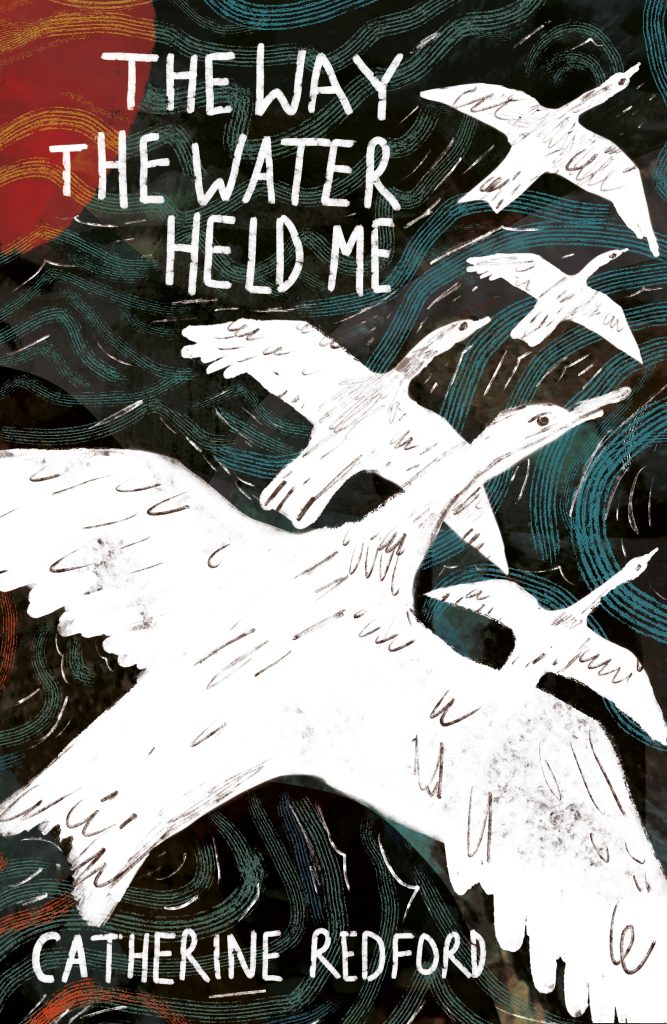
After my wife’s death, I turned to creative writing as a means by which to work through my grief. Wanting to examine the complexities of bereavement, I wrote poems on memory and mourning, on the public rituals surrounding death and the ways in which individuals find coping strategies for their loss. Those poems turned into my debut collection, The Way the Water Held Me, which was published this month.
Incorporating Mary Shelley into my poetry provided a source of comfort, helping me to feel less alone as a young widow. Her presence also helped to legitimise my emotions and took some of the shame away from the messiness of my grief; I’d expected to be sad after my wife died, but I’d been unprepared for the fear, anger, desperation, and even resentment that I felt. Mary became a canvas onto which I could project these feelings, whether as teenage best friend, gothic heroine, or doppelgänger. In ‘I allow Mary Shelley to create another monster’, I depict Mary as ‘ripping the seams’ of my life and ‘restitching it as her own’, so that I become ‘A double / treading in her footsteps, her loss lived again / through me’.
I was also interested in exploring the complications of Mary’s own personal path through grief, given the less-than-ideal state of her marriage at the time of Percy’s death. In the depths of her bereavement, she was eager – perhaps even desperate – to depict their love as perfect, whereas Percy had complained to friends of her ‘coldness’ and had betrayed her with a number of other women. Although there is no evidence that an affair took place, Percy’s infatuation with Jane Williams is evident in some of his last poems. I wanted to create an imaginative space in which Mary is able to confront this humiliation. In ‘Mary Shelley and I survey the aftermath’, I depict a post-apocalyptic scene in which Mary and I view the ruins of their house on the coast; in the poem’s closing lines, I sense the words from Percy’s Jane Williams poems ‘scuttling / into the dark corners of her [Mary’s] mind’ as she acknowledges her late husband’s unkindness towards her.
Inspired by the closing chapters of The Last Man, post-apocalyptic imagery is a thread running throughout the collection. However, I didn’t want to tether my work solely to the nineteenth century; instead, I also allowed myself the freedom to depict this metaphor for grief from more modern perspectives, such as the detonation of a nuclear bomb. I play with such anachronisms throughout The Way the Water Held Me. Rather than having Mary simply visiting me in the present or me visiting her in the past, I create a mutual space that we can occupy through the layering of timeframes. We watch late-night TV together, then sit by the hearth. I visit her in her rooms in 1820s London, where she wipes my wife’s text messages from my mobile phone. In ‘Mary Shelley and I hold a séance’, I bring together the experiences of our respective youths, depicting us listening to Coleridge by candlelight before miming nineties indie songs into hairbrushes. The result is something both disorientating and universal in its atemporality.
I particularly enjoyed incorporating Mary’s own words into my poetry, quoting from her letters, journals, and novels. At times, I rework or subvert Mary’s original meaning: words from The Last Man are reordered to create poems about the Last Woman, lofty reflections on posterity and empire becoming a simple portrait of the suffering and demise of a lone female in a world that fails to acknowledge the loss of civilisation. ‘Mary Shelley writes to tell me that her husband has drowned’ is another collage poem, this time made from words used by Mary in her letter to Maria Gisbourne of 15 August 1822. In this letter, Mary describes how the final house in which she lived with Percy was ‘after his own heart’; in using these words in a new context, I was able to play with the idea of Mary keeping Percy’s physical heart (or some incinerated organ resembling it) in her desk. In doing so, I simultaneously acknowledge, participate in, and interrogate the myth-making that surrounds Percy’s death and Mary’s widowhood, from the hastily-abandoned volume of Keats in Percy’s pocket to the wreck of the boat that mysteriously survived. In turn, this informs my poetry about my own experiences of the fetishisation of death, from mourning rituals to the significance we assign to the possessions kept when a loved one dies.
The Way the Water Held Me (The Emma Press) is available now from all good bookshops, priced £10.99.
‘Part elegy, part séance, part scream’ (Fiona Benson, winner of the Forward Prize for Poetry)
‘A beautiful, heartbreaking book’ (Liz Berry, winner of the Forward Prize for First Collection)
Dr Catherine Redford is a writer, researcher, and editor. She has published widely on Romantic and Victorian literature, with a particular focus on Mary Shelley, the Last Man theme, and the Gothic. Her poetry – which has featured in journals and anthologies including Magma, Under the Radar, and Lighthouse – embraces the crossover between the creative and the critical. Catherine has previously held positions as both a lecturer and a Career Development Fellow at the University of Oxford.