
As has been done for Percy Shelley, Coleridge, Kant, Keats and others besides, my doctoral dissertation at Oxford assembles a comprehensive metaphysical system out of its various and sometimes fragmentary manifestations in Shelley’s early published writings.
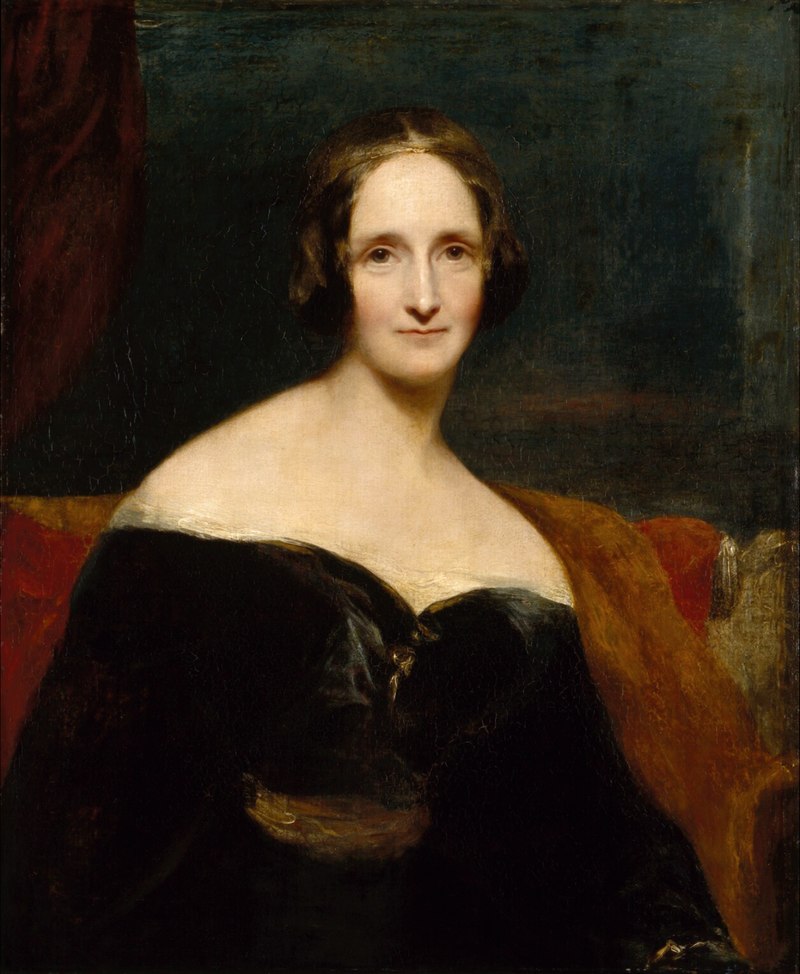
While the majority of relevant manuscripts are held at the Bodleian, my last chapter has necessitated a search beyond my institution’s holdings in order analyze popular conceptions of Frankenstein for potential patterns that may account for Shelley’s changes to the 1831 edition. Thus far, I have found that adaptations tend to shift away from the novel’s arguments on promethean creation in in favor of its themes of monstrosity, madness, and hubris. This shift in popular interpretations of Frankenstein parallels Shelley’s changes to the 1831 edition, which both absorbs the adaptations of her work into their source material and attempts to emphasize the disparity between original and copy. Surprisingly, the first stage adaptation of Frankenstein (most likely never performed) was written in 1821 in France. The manuscript of this sole dramatized Frankenstein not even potentially influenced by Richard Brinsley Peake’s Presumption; or, The Fate of Frankenstein (1823) is held in the BNF in Paris. Thanks to the funds provided by the Stephen Copley Research Grant I was able to spend five days consulting this, and two other relevant manuscripts held at the BNF:
- cote : MS Taylor-253 (Frankenstein ou Le Prométhée moderne. Mélodrame en trois actes à spectacles, tiré du roman de Mme Shelley)
- cote : Rondel-Ms-613 (Le monstre et le magicien)
- cote MS-DOUAY-1880 (Le Docteur magicien : pantomime en 1 acte)
Thanks to the Stephen Copley Research Award, I was able to reserve, peruse, and transcribe what the online descriptions gave me to understand were two completed scripts and one brochure. (In actuality, it was one completed script, one incomplete draft of a script never to be completed and one very detailed completed pantomime script, if script is the right word for such a thing). The first, a draft of 24-27 pages depending on what you count as a page of script, is the only direct adaptation of the three consulted documents. Written in August of 1821 it predates the habit that potentially originates with Presumption of making the Creature mute. The choice to skip over the chapters detailing the Creature’s creation and to begin instead after the trial and sentencing of Justine (who is not Justine but cousin Elizabeth, who is not engaged to Victor), results in a first act largely devoted to the Miltonic dialectic between creature and creator lost in later adaptations such as Presumption. The fact that Shelley, who never in her journals or letters criticized this adaptation but did compliment it, did not alter her Creature and the, some have accused, lengthy back and forth between him and Victor in the 1831 edition, suggests the Creature’s ability to speak and his meeting with his creator are integral to her metaphysical system as it emerges in Frankenstein.
The second and third documents, one a drama titled le Monstre et le magician (1826) and the other a pantomime called le Docteur magicien (1880/1881) were most likely never seen by Mary Shelley, but they do illustrate the Faustian tone that readers recognized in her novel and was emphasized in its earlier stage adaptations. As the monster is mute in these adaptations and therefore unable to provide the promise with the devil most easily associated with Faust, the character is augmented by un grande diable daneaux in the pantomime and a genie in the drama. All three adaptations make a point to root Victor Frankenstein’s quest for the principle of life in a desire for fame and glory, a point absent in the 1818 and 1831 editions of the novel but that is often used in summation of its plot: ambition as downfall.
I would like to thank the Award committee again for their support of my research, both financially and through written encouragement beyond the acceptance letter. I encourage everyone to apply and take advantage of this excellent opportunity.
A. Fiona Doxas enjoys what promises to be a lifelong obsession with Mary Shelley and her work. Currently, she is undertaking a DPhil at Oxford titled “‘Embodied Spirit’: Mary Shelley’s Metaphysical System.” It is proving difficult but rewarding.