
Editor’s introduction: As part of our ongoing spotlight on PGR/ECR series, the BARS Comms Team has commissioned this scholarly work from Dan Street, a PGR student at the University of Glasgow. Dan has written his own introduction to the post.
Author’s introduction: This blog post is an excerpt from an essay written for Professor Nigel Leask’s fourth-year ‘Romanticism and Revolution’ class at the University of Glasgow in the spring of 2024. While researching the two texts’ themes I became engrossed in Wordsworth’s radical movements across France and then back to the Lake District in the early 1790s. My childhood home on the south-eastern fringes of Lakeland is around three miles from Book 10’s ‘Romish chapel’ on Leven’s Sands, where the poet celebrates Robespierre’s death, so Wordsworth’s work has an added resonance. I then relished investigating connections between The Terror’s ‘ephemeral’ energy and that of Frankenstein’s creature, drawing close critical parallels between the two phenomena. I like to think that (not least through my appreciation of Raymond Williams) I am continuing Wordsworth’s radical Lakeland legacy in my own small way.
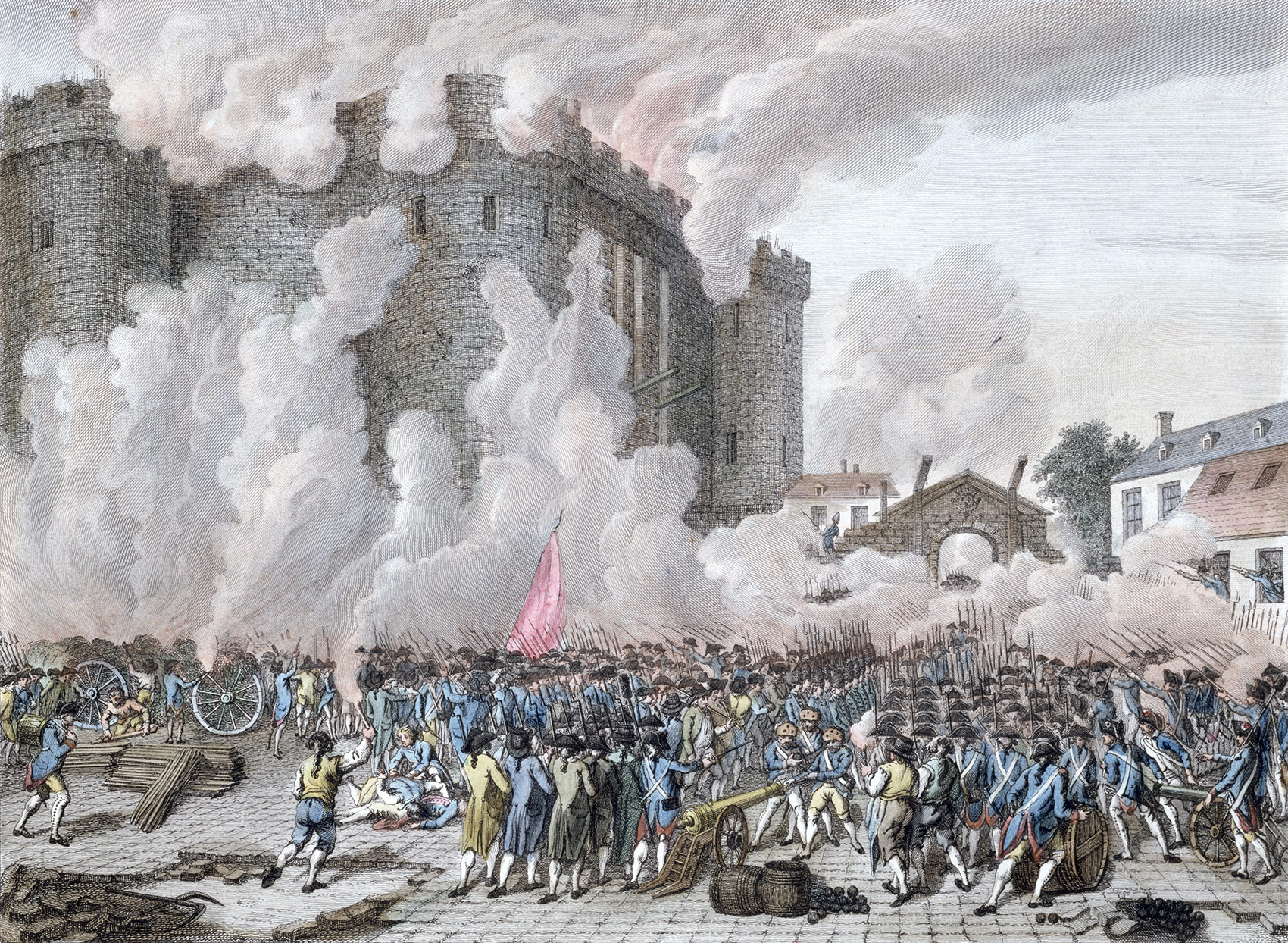
Harry Dickinson observes that the shockwaves of the French Revolution resounded across Europe as the continent engaged in a titanic struggle between monarchy and republicanism. The historian argues that the seismic events in France from the 1790s to the 1820s ‘polarized British society into the friends and enemies of the French Revolutionary cause’ (2011: 1). The hegemonic sentiment of the British state – engaging in total war with its expansionist neighbour France – afforded little consideration for the radicalism of William Wordsworth and Mary Shelley. Yet much to the chagrin of hegemonic mechanisms, William Wordsworth’s Book Tenth of The Prelude (1805) and Mary Shelley’s Frankenstein (1818) represent aspects of revolutionary energy as positive, even vital, forces; and argued that the bloodshed and terror of revolution demonstrated were necessary in the fight against Europe’s ancien régime.
In Book Tenth of The Prelude Wordsworth’s autobiographical speaker roams the streets of Paris in 1792, a city gripped by the violence of Maximilien Robespierre. Shelley, writing in 1818, proposes a European retrospective in the time shortly before Switzerland came under attack from the expansionist Napoleon in 1798 (Ferber 2010: 95). I argue that while the historical context of both texts is from a period when the lofty principles of the Revolution were turning sour – Saree Makdisi’s ‘impossible’ 1790s – the descriptions of ‘desolation and dismay’ in Paris and the creation’s (i.e., the monster’s) ‘hideous’ countenance represent revolutionary energy as speaking to Britain’s subversive sympathies with the French republican cause (Wordsworth [1805] 1995: l. 20; Shelley [1818] 2012: 36).
In an uncanny alignment with Shelley’s later text, Wordsworth opens his book-length poem with monstrosity. The Wordsworthian speaker recounts the violence of August and September 1792, when Louis XVI was overthrown, followed by the terrorism of the September Massacres (Shaw 2015: 422; Doyle 2019: 117):
Lamentable crimes,
‘Tis true, had gone before this hour, the work
Of massacre, in which the senseless sword
Was prayed to as a judge; but these were past,
Earth free from them for ever, as was thought –
Ephemeral monsters, to be seen but once,
Things that could only show themselves and die! (Wordsworth 1995: ll. 31-38).
That the revolutionary monsters scouring Paris are only temporarily powerful speaks to Shelley’s text and resonates with the sense that the revolutionary power of Frankenstein’s creature is inorganic and electrifying, sudden and shocking. The seismic massacres went on for four days and left some 1,400 victims guillotined (Doyle 2019: 52). Chris Doyle writes that a ‘panic-stricken’ Paris lived in uncertainty, thoughts swirling that such horror could spontaneously rise once more amid the powder keg of rival factions (ibid.). Philip Shaw’s more reserved perspective views Book Tenth as a lament for the lofty ideals of the revolution, claiming that the blank verse ‘recalls a by now familiar sense of numbness and detachment’ from the poet as he passes the bodies of the Swiss guard, piled high in the Parisian streets (2015: 422). Shaw’s assertion is validated when considering Wordsworth’s heartbreak of leaving Anette Vallon and his infant child in Book Nine. Although Wordsworth’s republicanism ran deep, he struggled to condone the Jacobins’ aims, led by a bloodthirsty Robespierre. The extremism is – after all – arguably the main reason why Englishman Wordsworth must return home. If he had stayed he would have faced execution by the terrorists due to his nationality; and so it proved – Britain would be at war with France in the coming months of January 1793.
In Frankenstein, the diegetic world is heavily gothicised, in homage to Jean-Jacques Rousseau. There begins a sublime description of the ‘gigantic’ creature roaming across the jagged Arctic ice and his ‘emaciated’ pursuer (Shelley 2012: 13, 14). Young Frankenstein, in recovery from the ordeal, is described as ‘cultivated’ and ‘self-educated’ (16). Further – with echoes of Jean-Jacques Rousseau, godfather of the French Revolution – the young scientist hails from Geneva in Switzerland, from ‘one of the most distinguished’ families ‘of that republic’ (18). Pamela Clemit highlights this revolutionary connection between the creature, Victor, and the birthplace of Rousseau when she writes that in June 1816 as the Napoleonic Wars were finally over, the Shelleys took ‘their second continental tour to Geneva’ hoping to learn more about the history and geography of events that had shaped the last two decades (2003: 30). This European tour, in a nascent age of peace, prompted Mary Shelley to reflect that: ‘The revolution which [Rousseau’s] writings mainly contributed to mature, and which, notwithstanding the temporary bloodshed and injustice with which it was polluted, has produced enduring benefits to mankind, which all the chicanery of statesmen, not even the great conspiracy of kings, can entirely render vain’ (ibid.). Writing after the ceasefire, Shelley is further from the bloodshed than Wordsworth. Shelley viewed this violence as a ‘temporary’ evil that produced many political ‘benefits’. In 1805, Wordsworth could not be sure of France’s course and so took a negative view of Napoleon’s expansionism. In the opening pages of Frankenstein, the fleeting, sublime image of the creature evokes a distillation of fast-moving electrical energy as the nimble creature crosses the ice, accentuated further by Frankenstein’s cultivated upbringing in that cradle of revolutionary philosophy, Geneva.
Both Wordsworth and Shelley’s texts subvert monarchic discourses of Britain in the Romantic era with representations of revolutionary energy as an uncomfortable yet ultimately positive force. Wordsworth perceives amid the conflict that the September Massacres only served to heighten tensions. He is exasperated and frustrated when recalling his time in Paris. But his adjective ‘ephemeral’ speaks to an apparition or a sharp shock of violence in the longue durée of history that will ultimately bring greater civility to the Western world. Shelley’s geographical context is purposefully situated in Rousseau’s birthplace to accentuate that the philosopher’s ideas outlasted Louis XVI’s secretive mechanisms. The creature’s frightening agility speaks to the meteoric career of Napoleon as he invaded Switzerland, a republic; the despot giving Britain’s monarchy its largest conflict to date. These sharp shocks of animalistic, revolutionary anger can ultimately offer a more egalitarian world.
Dan Street