
Between October and November 2026, I had the privilege of travelling to London and the Lake District to conduct research on two women discussed in Joseph Budworth’s account of his travels, A Fortnight’s Ramble to the Lakes in Westmoreland, Lancashire and Cumberland (1792): Mary Robinson, also known as the “Maid” or “Beauty” of Buttermere, and Elizabeth Mounsey, the Queen of Patterdale. What initially was going to be only one section of a wider chapter exploring how Romantic travelogues construct or challenge the interaction between alcohol and class, sprawled into an expansive project. I was keen to delve further into the lives of Robinson and Mounsey, and hoped to illuminate Romantic ideas about the relationship between women and drink. However, as all of us who work with the archives know, historical records and documents are institutionally and geographically dispersed. So, I pitched to the BARS Stephen Copley Award Scheme two research trips encompassing three archives: the British Museum and V&A in London, and Wordsworth Grasmere. I was thrilled to receive support for both.
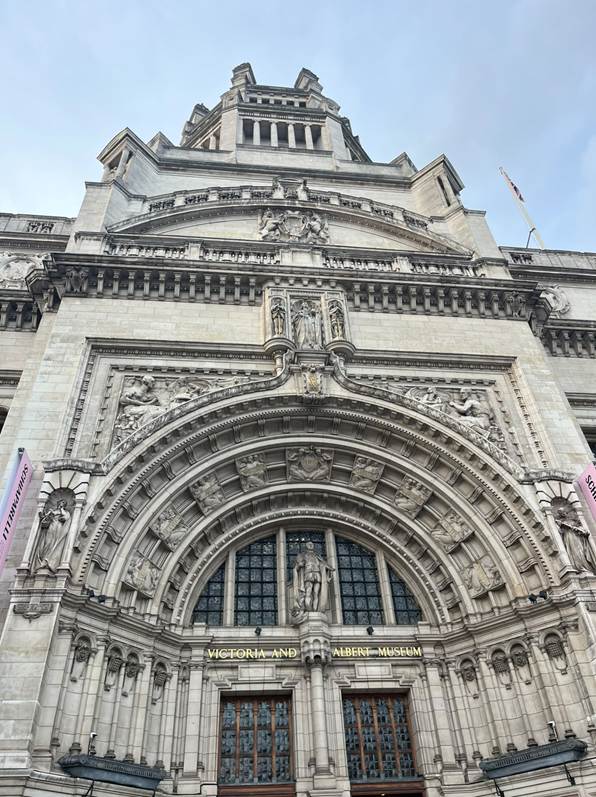
My first jaunt was a one-day trip to London to see two portraits of Mounsey, both sketched from life during the artists’ own journeys through the Lakes around the same time as Budworth’s travelogue. The British Museum housed Joseph Halfpenny’s etching Queen of Patterdale (1791; 1794), while my trip to the V&A was focused on John White Abbott’s watercolour The Queen of Patterdale (1791). During the day-trip, I dashed between the two institutions and London Euston, and prayed that my return trip wouldn’t be cancelled (it, luckily, wasn’t). Of particular interest to me were the ways in which the two artists depicted Mounsey considering that she was a known drunkard. The two renditions of her, depicted with a tankard and a smoking pipe, did not disappoint. I was keen to make the journey, rather than stick with the digitised copy, to capture the nuances of the two different mediums. Saturated with shades of creams, browns, and greys, Abbott’s pocket-size watercolour catches a sombre moment. As one of six watercolours made on Abbott’s tour, I was fortunate to see the portrait within its wider context, and it led me to reflect on its position as the only portrait amongst the landscapes. Halfpenny’s print, however, captures her rosy cheeks and incorporates a pop of colour in her cloak, head covering, and apron, amidst a background of washing and housework. Working from a sketch made three years prior, in 1791, the later engraving led me to think about the processes of reflection and revision that the engraving form allowed, and which was made all the clearer in my following visit to the Lake District.
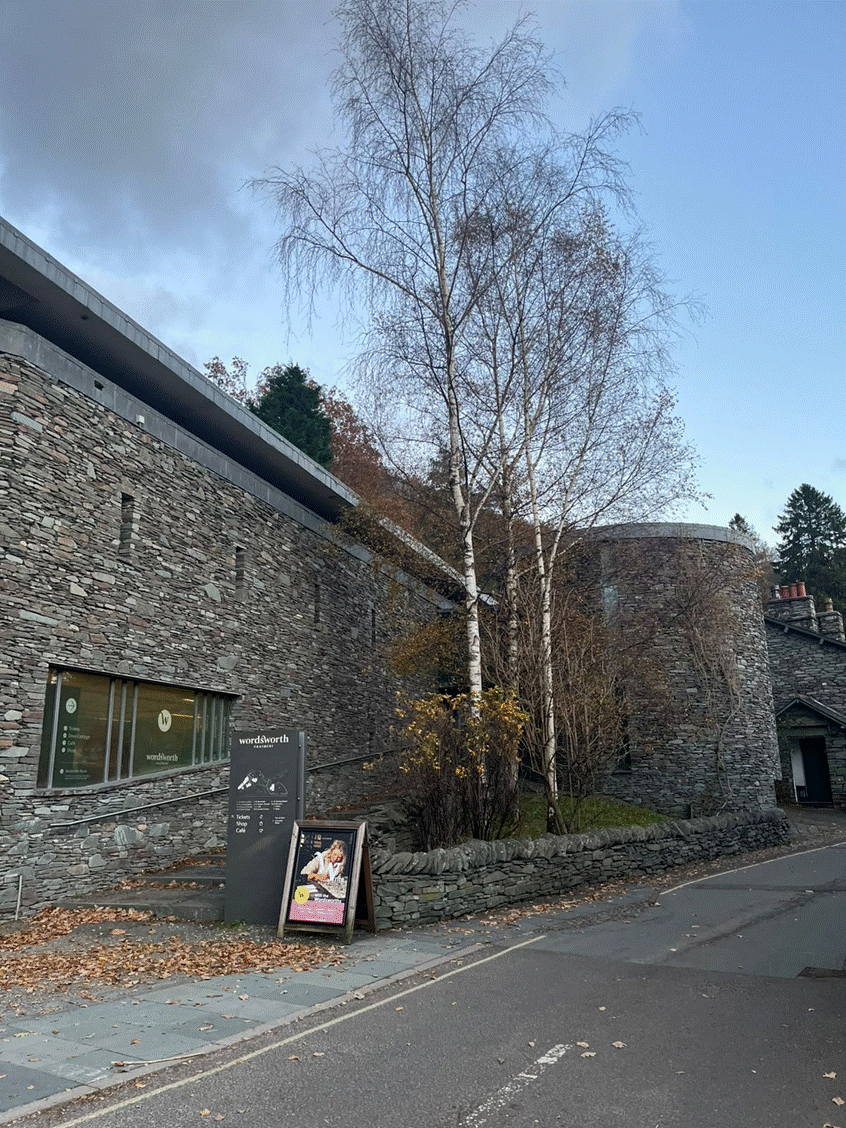
Three weeks later, I made the beautiful train journey through the Lakes to Windermere, and caught the local bus to Grasmere to start my two-day visit to the Jerwood Centre at Wordsworth Grasmere. There, my interest was largely geared towards Robinson, who may be best known by Romantic scholars for her scandalous marriage to John Hatfield in 1802 and, consequently, her presence in the work of William Wordsworth, Thomas De Quincey, and Samuel Taylor Coleridge. I was intent on understanding and examining just how much of Robinson’s “legacy” was informed by her position as an innkeeper’s daughter in The Fish Inn, Buttermere, and the extent to which the later work of the Lake Poets was influenced by Budworth’s initial account. To this end, I examined a range of texts, letters, and pieces of art, including James Gillray’s initial sketch of Robinson from his own walking tour in 1800 and his later engraving in 1802, a letter penned by Coleridge where he writes of the villainous Hatfield, and a third edition of Budworth’s travelogue that, I found, had had some revisions and footnotes added to dramatise the 1802 scandal, and to mitigate any damage he may have done to Mounsey’s reputation.
A highlight of this trip has been the ability to see clearly how depictions of Robinson and Mounsey altered over time. The ability to see Gillray’s 1800 sketch alongside the 1802 print makes all the more clear the process of revision that I had begun to question in London, and this was only amplified by the comparisons between the first and third editions of A Fortnight’s Ramble. By 1810, Robinson was no longer the anonymous ‘Sally of Buttermere’, but was now ‘Mary of Buttermere’ with a footnote detailing the 1802 scandal, and the inclusion of Budworth’s 1800 account of his return to Buttermere that was published in The Gentleman’s Magazine. Further, all mentions of the “Queen” and her drinking had been either removed or anonymised. Chapter XII, which focused on Mounsey and her consumption, now opens with an editorial note reflecting on his own ‘low humour’ that had hurt ‘some respectable people’ and instead continues with passages on snow and robins, removing any discussion of Mounsey, while a comment in Chapter XXX that warned how Mounsey ‘will probably soon fall a victim’ to spirits, is now a sombre recollection of how ‘one unfortunate object fell a victim to a destructive use of them’. So, my work has now not just become an exploration of evolution, but of erasure, and how this may intersect with changing ideas about women, alcohol, and rurality.
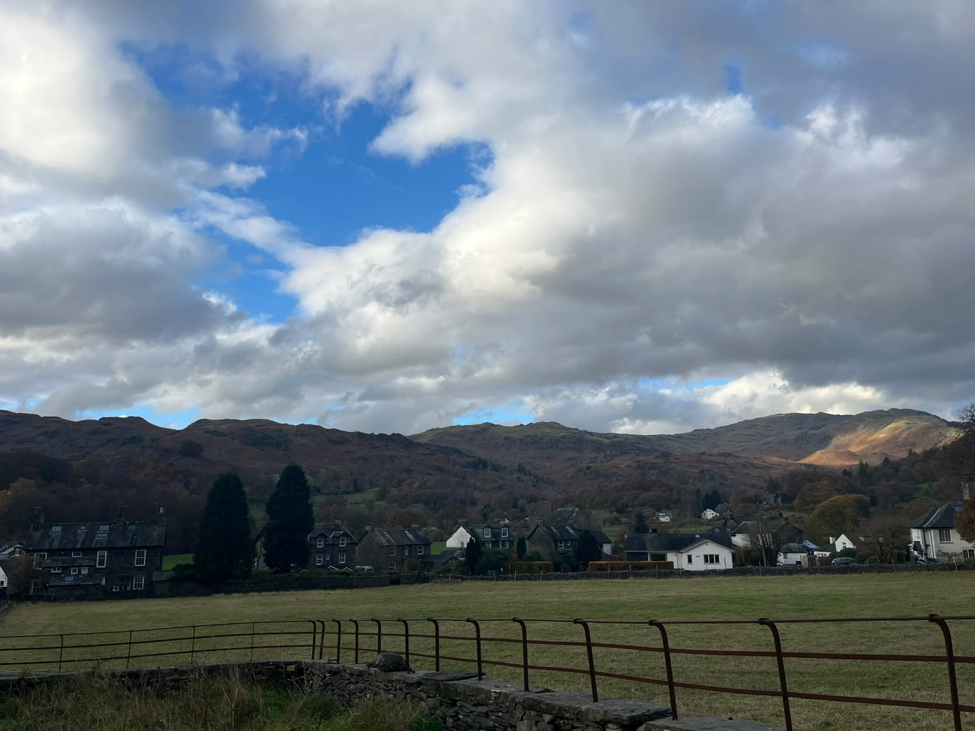
On my lunch breaks I was fortunate enough to be able to make the short walk into Grasmere village, pick up some Grasmere Gingerbread and, of course, pay my respects to Dorothy and William Wordsworth in the churchyard of St Oswald’s Church. In the evening I sat in The Swan and I thought about just how my own experience of travelling across Britain and visiting Grasmere loosely mimicked the Cumbria travelling experience of two-hundred years ago. I, too, relied on the inn for a place to rest, eat, and drink, and I was surrounded by other travellers who were, largely, hiking the area. I’m incredibly grateful to the BARS team for the opportunity to have made these two trips possible, and the work I have done will prove invaluable as I come to the final chapter of my thesis, and as I hope to turn some of these findings into their own journal article.
Megan D. Bennett is a third-year PhD student at the University of Sheffield in the School of English. Her thesis examines the thematic and ideological value of genre and literary style in relation to drink and class in four genres of visual and print of the long eighteenth century: satirical art, periodicals, the picaresque novel, and travel writing. You can follow Megan on Bluesky at https://bsky.app/profile/megandanielle.bsky.social
Photos courtesy of Megan D. Bennett.
References:
Joseph Budworth, A Fortnight’s Ramble to the Lakes in Westmoreland, Lancashire, and Cumberland. By A Rambler (London, 1792).
Joseph Budworth, A Fortnight’s Ramble to the Lakes in Westmoreland, Lancashire, and Cumberland, third ed. (London, 1810), Wordsworth Trust, 1991.51.3.