ESSAY PRIZE: Forum Essay Prize deadline extended

      Comments Off on ESSAY PRIZE: Forum Essay Prize deadline extended

The General Editors of Forum for Modern Languages have agreed to extend the deadline for submissions to the 2023 Forum Prize. This is now the 1 July 2023. All other details remain the same.

Romantic submissions very much encouraged!

Entries are invited for the 2023 Forum Essay Prize, on the subject of: 

“Courageous Art(s)”

We are looking for bold, visionary and persuasive essays that use academic research to pursue innovative questions. The winning essay will be that judged by the panel to have best addressed the topic with flair, ambition and resonance.  

The topic may be addressed from the perspective of any of the literatures and cultures (including literary linguistics, translation and comparative approaches) normally covered by the journal: Arabic, English, French, German, Italian, Portuguese, Russian and Spanish. Please note that material of a predominantly social science or sociological nature falls outside our scope. 

We are seeking submissions that focus on literature, film, art, or other cultural outputs that manifest courage in their content or form and/or which provoke us to be courageous in how we read, write, research and teach in our discipline(s). Possible approaches to the subject include, but are not limited to: 

  • courage of convictions;
  • courage in face of danger, prosecution, speaking to power, intimate or large-scale violence;
  • fear and fearfulness;
  • narratives of courageous self-expression;
  • dangerous mission and rescue stories;
  • art forms that dare to break moulds

The competition is open to all researchers, whether established or early career. Previous competitions have been won by scholars in both categories.

The winner will receive:
1. Publication of the winning essay in the next appropriate issue of Forum for Modern Language Studies
2. A prize of £500.

A panel of judges will read all entries, which will be assessed anonymously. At the judges’ discretion, a runner-up prize of £200 may be awarded. The Editors may commission for publication in Forum for Modern Language Studies any entries that are highly commended by the judges.

Entry requirements and Submission details for the ForumPrize 2023 

The closing date for entries is 1 July 2023

Entries must be written in English, be between 6,000 and 8,000 words in length (including notes), should conform to MHRA style, and must be accompanied by an abstract (approx. 150 words) summarizing the principal arguments and making clear the relevance of the essay to the competition subject. 

Essays should be submitted online at https://mc.manuscriptcentral.com/fmls, be flagged as ForumPrize entries, and follow the journal’s instructions to authors.

For initial queries and questions about the Forum Prize, contact Prof. Sara Jones (s.jones.1@bham.ac.uk, GE Forum Prize)
CfP: English journal on ‘Precarity in Perspective’.

      Comments Off on CfP: English journal on ‘Precarity in Perspective’.

The peer-reviewed journal English is seeking contributions for a special issue (eds. Archie Cornish, Kate De Rycker, and Cathy Shrank) which will bring together fresh perspectives on precarity, both as a topic for literature, and as an aspect of literary careers of the past and present.

We invite the following three types of contribution:

a) 2000-4000 word think-pieces, reflections on practice or other opinion pieces on our key themes

b) longer pieces of finished research that engage with our themes on an intellectual, historical, theoretical or practice-based level (7000-8000 words)

c) suggestions for relevant book reviews (books published from 2020 onwards)

Please send abstracts or essay outlines to kate.de-rycker@ncl.ac.uk by 15 July 2023.
For more details, see https://academic.oup.com/english/pages/call-for-papers-precarity-in-perspective

Cathy Shrank (Sheffield), Archie Cornish (Sheffield), and I are guest editing a special issue of ‘English’ (the Journal of the English Association), and we’re looking for articles (7,000-8,000 words), shorter think-pieces (2,000-4,000) and suggestions for book reviews on the theme of ‘precarity in perspective’.

We’re keen to hear from PhDs/colleagues working on precarious contracts, as well as in different sectors- e.g. school teachers, librarians, archivists.  

 Further details and suggestions for topics within that theme are available here in the CfP: 

https://academic.oup.com/english/pages/call-for-papers-precarity-in-perspective

The BARS Review, No. 59 (Autumn 2022)

      Comments Off on The BARS Review, No. 59 (Autumn 2022)
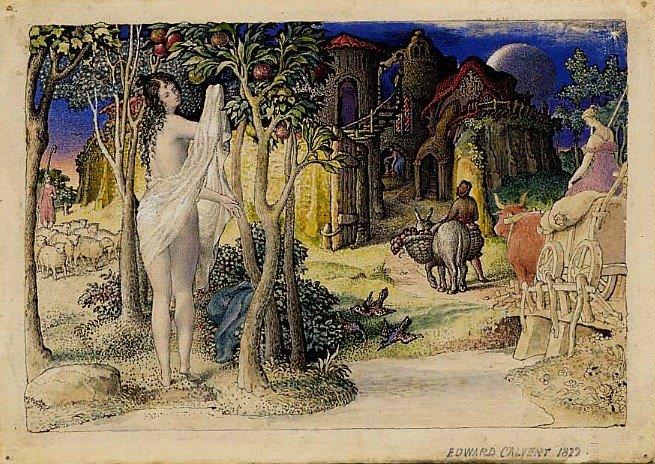
Edward Calvent, ‘The Primitive City’ (1822). © The Trustees of the British Museum. Reproduction used under a Creative Commons CC BY-NC-SA 4.0 license.

We are glad to announce the publication of the most recent issue of The BARS Review (No. 59, Autumn 2022). The issue contains ten reviews of recent scholarly work within the field of Romanticism, broadly conceived. Four of the reviews comprise a ‘spotlight’ section on ‘Rethinking Romantic Concepts’.

The individual reviews are detailed below; all reviews are openly available in html and .pdf through The BARS Review website, and a compilation of all the reviews in the number can be downloaded as a .pdf.

If you have comments on the new number, or on the Review in general, we’d be very grateful for any feedback that would allow us to improve the site or its content. As always, Mark Sandy would be very happy to hear from people who would like to review for BARS.

Editor: Mark Sandy (Durham University)
General Editor: Anthony Mandal (Cardiff University)
Technical Editor: Matthew Sangster (University of Glasgow)

Reviews

1) Katie Garner on John Bonehill, Anne Dulau Beveridge and Nigel Leask, eds., Old Ways New Roads: Travels in Scotland, 1720-1832. Edinburgh: Birlinn, 2021.
2) Sheng Yao on Saeko Yoshikawa, ed., William Wordsworth. Guide to the Lakes. Oxford: Oxford University Press, 2022.
3) Peter Francev on Bernard Beatty, Reading Byron: Poems, Life, Politics. Liverpool: Liverpool University Press, 2022 and Jerome McGann, Byron and the Poetics of Adversity. Cambridge: Cambridge University Press, 2023.
4) Uttara Natarajan on Jonathan Mulrooney, Romanticism and Theatrical Experience: Kean, Hazlitt, and Keats in the Age of Theatrical News. Cambridge: Cambridge University Press, 2018.
5) Chris Townsend on Beth Lau, Greg Kucich and Daniel Johnson, eds., Keats’s Reading / Reading Keats: Essays in Memory of Jack Stillinger. Cham: Palgrave Macmillan (Springer Nature), 2022.
6) Kostas Boyiopoulos on Foteini Lika, Roidis and the Borrowed Muse: British Historiography, Fiction and Satire in Pope Joan. Newcastle upon Tyne: Cambridge Scholars Publishing, 2018.

Spotlight: Rethinking Romantic Concepts

7) Richard Cronin on Richard C. Sha and Joel Faflak, eds., Romanticism and Consciousness Revisited. Edinburgh: Edinburgh University Press, 2022.
8) Tom Marshall on Chris Townsend, George Berkeley and Romanticism: Ghostly Language, Oxford: Oxford University Press, 2022.
9) Toby Lucas on Mathelinda Nabugodi, Shelley with Benjamin: A Critical Mosaic. London: UCL Press, 2023.
10) Francesco Marchionni on Madeleine Callaghan, Eternity in British Romantic Poetry. Liverpool: Liverpool University Press, 2022.

CfP: NASSR 2024 Romantic Insurrections / Counter-Insurrections

      Comments Off on CfP: NASSR 2024 Romantic Insurrections / Counter-Insurrections

August 15-18, 2024 Georgetown University, Washington D.C.

We convene the 30th Annual NASSR Conference in Washington D.C., a city that witnessed on January 6, 2021 an insurrection, which Padma Rangarajan has described as a “a rebellion in miniature.” Thinking from this place, we invite participants to reflect on the nature of insurrection and the counter-insurrections that follow in the wake of uprisings. Romanticism has often been associated with the politics of “revolution,” which suggest a wholesale inversion or overturning. We wish to ask about other motions and scales of action and repressive reactions that took place in the nineteenth century. Where did seemingly small acts of resistance spark enormous consequences? How do we understand the relationship between political insurrection and the subjective “state of insurrection and turmoil” that Victor Frankenstein describes or Jane Eyre’s “brain in tumult and…heart in insurrection”? Are there lessons that we can draw from nineteenth-century insurrections – social and textual – and bring to bear upon our present political realities? How might recent uprisings and the often-aligned state and white supremacist counters to them revise our reading of the past?

Please submit abstracts of 250 words, panel proposals of 750 words (including details of individual papers plus a rationale for the panel) using the submission form by January 5, 2024.

For more information see here.

WHEN

August 15, 2024 at 6:00pm – August 18, 2024

WHERE

Georgetown University
3700 O St NW
Washington, DC 20057
United States

Event: John Clare’s Fens

      Comments Off on Event: John Clare’s Fens

9th September 2023

In October 1849, the poet John Clare wrote to his son Charles from Northampton asylum about all the things he was missing back in Northborough, and in Helpston, his first home. Along with his garden, the woods, and various friends and family members, there was a particular kind of landscape he longed for: ‘I shall be glad to get out o’ thought & out o’ sight in the Fens as usual’. The purpose of this study day is to revisit the enduring importance of fens in Clare’s work, taking in the broad scope of how they shaped his poetic imagination, his interest in the environment, his understanding of mental and physical wellbeing, and his sense of community. A mixture of literary discussion and field-work, the day will offer a selection of short talks and group poetry readings that explore Clare’s fens in writing, before embarking on a guided walk of one of the areas surrounding Helpston familiar to Clare, led by the artist Kathryn Parsons, and Sarah Lambert, a botanist and ecologist who often works with Langdyke Countryside Trust. 

This one-day event, organised by the Centre for John Clare Studies and Kathryn Parsons and held partly at the John Clare Cottage in Helpston, is open to anybody who is interested in thinking with Clare about the importance of these strange, liminal, and – in our present moment – much-altered landscapes.

There are a limited number of spaces available, so registration in advance is essential. Please email Sarah Houghton-Walker at sh250@cam.ac.uk to register your interest in attending in the first instance. A full programme and finer details of the day will be sent to those on this list in due course, along with information on how to secure your booking through our secure payment site. Please note that a place can’t be guaranteed until payment has been received. 

Call for Papers – Reception of Indic Antiquity in Romantic Literature

deadline for submissions: June 15, 2023

contact email: soundlogic888@gmail.com

Cultural understandings of the East, specifically of India, in British Romanticism have opened up numerous lines of inquiry in Romantic and eighteenth-century studies. Phiroze Vasunia, Michael J. Franklin, Andrew Rudd, and others have commented at length on the ways in which English writers related to India during the Romantic period. Works by writers like William Jones, Phebe Gibbes, Robert Southey, Sydney Owenson, and Wilke Collins reveal the extent to which India became a point of creative fixation as well as cultural appropriation. The translations of many works of ancient and medieval Indic texts were important to the galvanization of the British literary imagination. We might ask if there is a way of amending some of the injurious perspectives that evolved over the course of the nineteenth century viz. India as the British Empire expanded its foothold, though not without appreciation for many areas of genuine exchange and learning between the philosophical traditions of Britain, Europe, and the Indian subcontinent that simultaneously occurred. English interest in India began during the Renaissance; however, during the Romantic period, the British Empire pivoted to India as its influence in the Atlantic weakened, following the American and Haitian Revolutions.

This panel explores how Anglophone writers translated and interpreted foundational religious texts in the Hindu tradition, such as the Bhagavad Gita and the Upanishads, as well as Sanskrit literary works such as Kalidasa’s Shakuntala. We are particularly interested in papers that reflect on the underlying spiritual message and worldview of these texts and how it impacted literary creativity on both sides of the Atlantic. 

Note: to submit a proposal, you’ll need to create a PAMLA account. Papers may be proposed through the following link: https://pamla.ballastacademic.com/Home/S/18903

All proposals are due on June 15. If you have any questions, you can reach the presiding officer for the session, Dr. Divya Nair, at soundlogic888@gmail.com

For more details about PAMLA 2023 please see here: https://pamla.ballastacademic.com/Home/S/18903 

Call for Papers – Provocative and Provoking: Fifty Shades of Byron

      Comments Off on Call for Papers – Provocative and Provoking: Fifty Shades of Byron

26th-27th April 2024

Newstead Abbey

“But words are things, and a small drop of ink

Falling like dew, upon a thought produces

That which makes thousands, perhaps millions, think.”

2024 marks the bicentenary of Lord Byron’s death. It is therefore fitting that the 2024 Newstead Abbey Byron Conference not only commemorates his death but also celebrates the life and works of both the multifaceted man and his dazzlingly diverse poetry. The theme for this year’s conference, Provocative and Provoking: Fifty Shades of Byron has been chosen to encourage papers exploring every aspect of Byron’s life, his poems, and his contemporary and current reception across the globe.

We could offer a lengthy list of potential topics, but it would be impossible to include them all – so instead, we invite you to join us and discuss your Byrons – the poet and the playwright, the lover and the misanthrope, the pacifist and the warleader, the atheist and the spiritualist, the witty correspondent and the shrewd satirist. We also invite you to share your insights and observations regarding Byron’s poems, the profound fluctuations in his popularity over the last two hundred years, and the enduring significance of the poet and his poetry for so many cultures and communities today.

The conference will be held in Newstead Abbey, and delegates will have the opportunity to tour the house and gardens during the conference. In addition, to mark this special occasion, we will also be expanding the conference to include additional cultural events, both in the Abbey and at nearby locations connected with Lord Byron and his family. Details will be made available later in the year once the events are finalised.

The deadline for the Call for Papers is the 2nd of January. Please send abstracts of no more than 300 words, together with a short professional biography (of no more than 100 words), to Dr Emily Paterson Morgan (newsteadbyronconference@gmail.com). 

The Byron Society will be providing a small number of bursaries for students and early career researchers. Details will be made available later in the year. If you would like to be considered for one of the bursaries, please include a short statement in your submission, outlining why you require the bursary. 

http://www.thebyronsociety.com/2024-newstead-abbey-byron-conference

Contributor Needed: Year’s Work in English Studies

Hi all, 

The Year’s Work in English Studies (published by Oxford UP, sponsored by the English Association) is searching for a contributor to cover Romantic drama (1780-1830) for the upcoming edition (2022 publications).  Reviewers are compensated and may keep the books sent for review.  For more information, to express an interest, please contact Steven Lynn at lynns@sc.edu

Thanks!

Steven Lynn

Dean, South Carolina Honors College

Louise Fry Scudder Professor

BARS Digital Events Available on YouTube

      Comments Off on BARS Digital Events Available on YouTube

Just a little reminder to our readers that all of the past BARS Digital Events 2022-23 are available on our YouTube channel, click here to visit, and don’t forget to subscribe!

We have had some wonderful events in this series kicking off with Reconfiguring the Sublime: Romanticism’s EcoGothic Waters.

Next up was Re-Awakening the Harp of the North: New Approaches to Walter Scott.

Then our BARS Digital Burns Night returned for the third time!

The fourth event in this series was on Romantic Portraits and their Afterlives: Media Arts in Dialogue.

Finally, The Pandemic and Romantic Pedagogy in Asia was the final event of this series.

And don’t forget that you can also find recordings of our previous events from earlier years in our back catalogue on YouTube too!

Call for Applications: BARS Communications Assistant 2023-24

      Comments Off on Call for Applications: BARS Communications Assistant 2023-24

The British Association for Romantic Studies (BARS) would like to invite applications for a Communications Assistant to assist with the BARS Blog and social media for a period of one year tenable from June 2023. We are looking for someone with previous experience of using blogs and social media for academic purposes. This position is paid an honorarium of £750 and is open to all postgraduate students and early career researchers working in Romantic Studies anywhere in the world. This role will require around 1-2 hours per week.

Responsibilities will include:

  • Leading and contributing to the BARS Blog series ‘On This Day’ and ‘Archive Spotlight’
  • Proposing and curating new blog posts/series
  • Delivering an active and strategic social media presence
  • Attending online meetings with members of the BARS Executive Committee

The successful applicant will work closely with the Communications Officer, Amy Wilcockson.

This post is an excellent career-development opportunity for a PhD student or early career researcher. You will have the chance to develop valuable skills in the field of scholarly communications and to contribute to the BARS postgraduate community. You will gain valuable skills (website management, content creation and digital communications) which will be useful in academic and non-academic roles alike. We expect that this role will be held alongside other academic or professional commitments such as completing a research project and/or teaching, and we encourage flexible working. 

Essential requirements:

Desirable experience: 

  • Previous involvement in writing or editing blog posts 
  • Experience of using WordPress 
  • Skilled in using social media for professional purposes, specifically experience of using Twitter and Facebook

To apply: please send an academic CV and personal statement (no more than 1 A4 page) explaining why you are best placed to undertake the duties above to britishassociationromantic@gmail.com by 5 June 2023.
Informal enquiries can be directed to Amy Wilcockson at amy.wilcockson@nottingham.ac.uk