Amy WilcocksonComments Off on Incoming BARS Communications Assistants 2023-24
We received a number of very high quality applications for the BARS Communications Assistant 2023-24 position. The Executive Committee are delighted to announce that there will be two new Assistants working on the BARS Blog and social media in the next academic year:
Isabelle Murray is a Masters graduate from Cardiff University. Her thesis, ‘The Glory of the Flower: the Flora in William Wordsworth’s Ecopoetry’, focuses on the sociality of Wordsworth’s natural world, providing an original colour analysis of the use of yellow in his poetry. Her blog site, LetsTalkRomanticism, seeks to explore modern literature, art, music and film through the lens of British Romanticism. Her first post compares Bruce Springsteen’s discography with the poetry of Wordsworth, ‘I walk Streets of Fire… A few miles above Tintern Abbey’, underlining the potential of Romantic literature as an expansive genre. Follow Isabelle on Twitter here.
Statement: I am thrilled to be a part of the BARS community! I cannot wait to surround myself with others who have such a passion for Romanticism.
Dr Rosie Whitcombe is a writer and academic. She is currently an MHRA Postdoctoral Research Associate at the University of Sheffield where she is helping to prepare The Cambridge Edition of the Works of Ann Radcliffe for publication. She studied for her PhD at Birmingham City University. Her thesis, ‘John Keats and the Literary Letter’, provides a new historical and critical account of Keats as a letter writer, with a particular focus on self-fashioning, theories of the epistolary, and the text as artefact. Her essay, ‘Connection, Consolation, and the Power of Distance in the Letters of John Keats’, won the 2020 Keats-Shelley Essay Prize and was published in The Keats-Shelley Review. She co-runs an educational YouTube channel, ‘Books ‘n’ Cats’, that seeks to disseminate academic literary content to a wider audience. Follow Rosie on Twitter here.
Statement: I’m really pleased to be joining the BARS team! Very much looking forward to working with people dedicated to furthering the reach of Romantic studies.
More on our plans for this academic year very soon! Keep an eye on our Twitter page and Facebook group for how you can be involved and contribute to the BARS Blog.
With massive thanks to Francesca Killoran, our outstanding Communications Assistant for 2022-23.
Amy WilcocksonComments Off on Stephen Copley Research Awards 2023 (Round One): Awardees Announced
The BARS Executive Committee established the Stephen Copley bursary scheme in order to support postgraduate and early-career research within the UK. The bursaries primarily fund expenses incurred through travel to libraries and archives necessary for the applicant’s research, alongside other research-focused costs, such as (but not limited to) photocopying, scanning, and childcare. Please do join us in congratulating the very worthy winners and their projects:
Elisa Cozzi (Oxford) – ‘Italy and the Irish Romantics: Networks, Nations, and Literary Encounters 1798– 1848’
Ella Morrish (York) – ‘Materiality and Mourning in British Women’s Poetry of the Romantic Period’
Serena Qihui Pei (UCL) – ‘Thomas Manning and his Chinese Book Collection: Rethinking Sinological Influence on the Romantic Circle’
Dr Honor Rieley (Edinburgh) – ‘Newspaper Literature and the Provincial Perspective in Scotland and the North of England, 1820–40’
Once they have completed their research projects, each winner will write a brief report. These reports will be published on the BARS Blog and circulated through our social media. For more information about the bursaries, including reports from past winners, please visit our website: www.bars.ac.uk.
Amy WilcocksonComments Off on BARS President’s Fellowship 2024 – Open for Applications
In June 2020, the British Association for Romantic Studies announced its unequivocal support of the Black community, its condemnation of all forms of racism and its commitment to practical action. In response to the enduring and systemic damage caused by racism, the BARS Executive commenced a programme of initiatives focused on the histories and literatures of People of Colour. Among these initiatives is the BARS President’s Fellowship, which was officially announced at the 2021 summer virtual conference, Romantic Disconnections/Reconnections.
The President’s Fellowship is open to scholars from Black, Indigenous and other minority ethnic backgrounds working on any aspect of Romantic Studies to support research, teaching and/or public outreach expenses of up to £1500. Expenses may include, but are not limited to, costs emerging from: travel and accommodation for research-focused or archival visits; photocopying and digitisation; caring commitments; producing and circulating teaching resources; organising and delivering public outreach activities; setting up and running networks or collaborations; set-up and maintenance costs for online platforms such as blogs and websites.
BARS invites applications from postgraduate, early career and independent scholars. Awards will be made based upon the significance and relevance of the project rather than upon the career status or affiliation of the applicant. A postgraduate must be enrolled on a doctoral programme; an early career scholar is defined here as someone who holds a PhD but has held a permanent academic post for less than five years by the application deadline. Application for the award is competitive and cannot be made retrospectively. Applicants are encouraged to consider applying for the maximum amount, if appropriate, although applications below the threshold will not adversely affect the judgement of the awarding panel. Please indicate any relevant existing funding – match funding (whether cash or in-kind) will be looked upon positively. We anticipate awarding one President’s Fellowship in any given year; in exceptional circumstances, additional awards may be made. Successful applicants need not be based in the UK, but must be members of BARS before taking up the award.
The inaugural 2023 President’s Fellowship awardee was Ifemu Yaa Omari (University of Wolverhampton), for a project on Mary Prince. For a write-up of Ifemu’s award, see here.
Please download and complete the linked form when applying for this scheme.
The name(s) of the recipient(s) will be announced on the BARS website and social media, and the awardee or awardees will be asked to submit a short report to the BARS Executive Committee within four weeks of the completion of all related activities and to acknowledge BARS in relevant publicity, including publications. Reports may also be published on the BARS Blog where this is appropriate.
Applications and informal queries should be directed to the Bursaries Officer, Dr Gerard McKeever (gerard.mckeever@ed.ac.uk) at the University of Edinburgh. If you require further guidance about the funding aspects of the scheme, please feel free to contact the Treasurer, Dr Cassie Ulph (bars.treasurer@gmail.com). There will be one round of the BARS Presidential Fellowship in each calendar year: the closing date for the 2024 round will be 5pm on Friday, 10 November 2023. In usual circumstances, applicants will be informed of the panel’s decision within four weeks of this closing date. It is anticipated that the successful applicant(s) would take up their award as close to the commencement of 2024 as practicable.
Amy WilcocksonComments Off on BARS Open Fellowship 2024 – Applications Welcome
We are delighted to announce that, in addition to our established BARS funding streams – most of which are limited to early career and postgraduate applicants – this year we are launching a new scheme open to our entire membership: the Open Fellowship.
The Open Fellowship is available to scholars at any career stage undertaking exceptional work at the forefront of Romantic studies to support research expenses of up to £2000. Expenses may include, but are not limited to, costs emerging from: travel and accommodation for research-focused or archival visits; photocopying and digitisation; caring commitments; producing and circulating teaching resources; organising and delivering public outreach activities; setting up and running networks or collaborations; set-up and maintenance costs for online platforms such as blogs and websites.
Awards will be made based upon the significance and relevance of the project rather than upon the career status or affiliation of the applicant. Application for the award is highly competitive and cannot be made retrospectively. Applicants are encouraged to consider applying for the maximum amount, if appropriate, although submitting applications below the threshold will not adversely affect the judgement of the awarding panel. Please indicate any relevant existing funding – match funding (whether cash or in-kind) will be looked upon positively. We anticipate awarding one Open Fellowship in any given year; in exceptional circumstances, additional awards may be made. Successful applicants need not be based in the UK, but must be members of BARS before taking up the award.
Please download and complete the linked form when applying for this scheme.
The name(s) of the recipient(s) will be announced on the BARS website and social media, and the awardee or awardees will be asked to submit a short report to the BARS Executive Committee within four weeks of the completion of all related activities and to acknowledge BARS in relevant publicity, including publications. Reports may also be published on the BARS Blog where this is appropriate. Applications and informal queries should be directed to the Bursaries Officer, Dr Gerard McKeever (gerard.mckeever@ed.ac.uk) at the University of Edinburgh. If you require further guidance about the funding aspects of the scheme, please feel free to contact the Treasurer, Dr Cassie Ulph (bars.treasurer@gmail.com). There will be one round of the BARS Open Fellowship in each calendar year: the closing date for the 2024 round will be 5pm on Friday, 10 November 2023. In usual circumstances, applicants will be informed of the panel’s decision within four weeks of this closing date. It is anticipated that the successful applicant(s) would take up their award as close to the commencement of 2024 as practicable.
1) How did you first become interested in edible things in the long eighteenth century?
I remember being taken by eighteenth-century literature’s tendency to exhaustively detail every item on the menu when it comes to the depiction of Oriental banquets. The Greek dinner scene in Lord Byron’s Don Juan, with which my book begins, is one of the more famous instances, but examples like it abound in literature from the period and trace back to the Arabian Nights story cycle. There had been critical work on the function of the epic catalogue in British Orientalism, but not as much (with the exception of Timothy Morton’s The Poetics of Spice) on the particular significance of the cataloging of edible things. On the one hand, these culinary lists provided readers with a sensory experience of the Orient. On the other hand, the conventionality of the rhetorical gesture seemed to subvert the very materiality invoked by the listing of edible things. This tension between words and things that the literary text itself was foregrounding, even interrogating, was what drove my interest. I think there is a scholarly tendency to see imperial commodities in literature as opaque archives that must be illuminated by the present-day critic, whose job it is to investigate the histories of production, distribution, and consumption of such commodities. But I found the representation of edible things in long eighteenth-century literature a lot more self-reflexive than hitherto acknowledged, and I began to wonder why, and to what end.
2) How did you come to select tea and opium as the major foci for your book?
In the British context, tea and opium are arguably the two ingestible foreign commodities that underwent the most dramatic cultural transformation, so they foreground the kind of tension between the symbolic and the material that I am particularly interested in. Tea was the “China liquor” whose cultural taint British commentators worried about during the eighteenth century, but by the nineteenth century, it had become an icon of English national identity. Opium exhibited an inverse trajectory: while it was never domesticated, Thomas De Quincey could in the 1820s still paint a conceivable portrait of an English opium-eater, but as the century wore on, the drug was increasingly marked “Chinese” even though large amounts were produced in British India. There have of course been major studies on the material and literary circulations of each of these two commodities, but my book focuses on their symbolic entanglement and argues that the two need to be considered as a dialectical pair. Understood in relation to each other, the symbolic fluidities of tea and opium provide a paradigmatic framework for understanding how the consumption and reception of exotic edibles more broadly nurtured a self-reflexive Orientalism that was central to the formation of British imperial identity.
3) Which tropes are most common in self-reflexive literary engagements with exotic ingestants, and what’s your favourite atypical example from your book?
Many of the scenes of ingestion I examine in the book equate edible things with inscriptions, stories, dreams, spells, fantasies, and other forms of meaning making. Literary treatments of tea, for instance, frequently entail discussions of gossip around the tea-table. In Oliver Goldsmith’s The Citizen of the World, “Bear’s claws” and “Birds nests” refer to specific dishes while also functioning as metaphors for exotic reading materials. In Walter Scott’s The Talisman, the eponymous “talisman” – defined in the Oxford English Dictionary as an occult object that derives magical power from the characters with which it is engraved – is used to name the opiate administered by Saladin. In each of these instances, the material effects of the edible thing are inseparable from the discursive apparatus that diagnoses or otherwise makes sense of those effects. One notable exception is Charles Dickens’s Little Dorrit, where Flora Finching’s imaginations of China are sharply contrasted with her hearty appetite. The novel makes a point of underscoring the gap between the material and the symbolic and suggests that imperial propaganda works by passing one off as the other. In my book, I explain what the atypical example of Little Dorrit tells us about the shift in British imaginations of the Orient (and of China more specifically).
4) Your chapters trace a ‘historical narrative of Britain’s ongoing creation of imperial selfhood’. What would you identify as the most crucial turning points in this narrative?
Historians have pointed to the crucial role that exotic commodities played in driving the eighteenth-century consumer revolution. My book argues that the intersection between literary Orientalism and exotic consumerism during this time created, among British writers, a self-reflexive engagement with the Orient that was central to the formation of Britain’s imperial identity. The two Opium Wars, beginning in 1839 and ending in 1860, marked a shift away from such self-reflexive engagements toward a more uncritical, xenophobic othering of the East that was further consolidated by mid-century exhibitions such as the 1851 Great Exhibition. Alongside the decline of such self-reflexivity, I noticed in British Orientalist texts a concomitant replacement of the ingestion trope with one of vision, which I connect to the emergence of the “Barbarian eye” as a salient figure in public discourse during the Opium Wars.
5) What new projects are you currently working on?
I’m continuing to think about the relationship between empire and culture, but have started developing these interests within the fields of media and contemporary popular culture. My current project focuses on South Korean popular culture, particularly what its global ascendency means for the creation of hybrid cultural identities. Recently, for Post45 Contemporaries, I edited a cluster of essays on the phenomenon of the Korean Wave and its implications for the development of a global cultural studies. I also have an article forthcoming with the International Journal of Communication that looks at Squid Game and Netflix in order to consider how alternative structures of feeling in South Korean television challenge American narrative ideologies. These inquiries form part of a broader book project on the cultural and transcultural logics of South Korean television and film genres.
Amy WilcocksonComments Off on ‘Am I a Woman or a Slave?’ A formidable event supported by BARS President’s Fellowship Scheme – Ifemu Omari
Two decades ago, I discussed the idea of doing a PhD on Mary Prince with a Senior Lecturer from a Russell Group university. “It’s already been done.” he retorted. And then, a little more spirited, he said, “There’s something I want to show you.” I swivelled in his direction on the chair in his small book-crammed office. He opened two large doors to reveal ceiling-to-floor of spine-bound brown books. “This is where PhDs end up”, the Doctor of Philosophy concluded glibly. A few days later, he sent me an essay on Mary Prince written by one of his students, published on the University’s website. I was highly critical of the essay’s central argument but had neither the language nor the platform to challenge it.
Fast forward to 2019 when my PhD supervisor at the University of Wolverhampton, Ben Colbert, drew my attention to the BARS Stephen Copley Award. I carefully read the brief and informed Ben that, “I can’t see myself in this.” Ben assured me that I would be fine and much to my surprise, I won the award which took me to the Mitchell Library in Glasgow to investigate the archives of the pro-slavery journalist, James MacQueen. Consequently, I presented a paper in the NASSR/BARS conference in August 2022 called ‘Antics and Theatrics: British and West Indian newspaper/periodical (Re)presentations of Mary Prince’.
I often describe my PhD journey as a dense forest in which I have created a path but as I walk down the route I have carefully constructed, the path, almost of its own accord, branches out in different directions. This tests my discipline to stay on track. Occasionally, I find a tangential lane irresistible – I tell myself that I’m not changing directions, just modifying the shape of the path a little. Such was the case when I saw the invitation to apply for a new BARS award. Besides (I told myself) opportunities rarely appear in a timely fashion and the Mary Prince website – my main reason for applying for the BARS President’s Fellowship – had been at the back of my mind for some time.
As an African Caribbean scholar, I am keenly aware that since Britain’s clumsy attempts to dismantle the infrastructural evidence of chattel slavery and colonisation, this sceptred isle has been uneasy with itself and its relationship with the Caribbean ‘other’. I am also acutely mindful of the fragmentation and the invisibilities of African Caribbean histories which lead me to continually examine my own role as a black scholar.
Since beginning my PhD research, I have observed a number of historical milestones – the Windrush scandal (2018); the Covid pandemic (2020 onwards); the murder of George Floyd (May 2020) and the international protests which followed led by Black Lives Matter (BLM). These events have intensified my self-scrutiny as a black scholar in the academic spaces within which I interact.
In addition to global protests from America to Japan and from Brazil to Israel, George Floyd’s murder sparked a spate of activity and conscientisation world-wide. For instance, in July 2020 all the top 10 books on the New York Times’s bestseller list were about racism. And closer to home, Bernardine Evaristo’s novel Girl, Woman, Other and Reni Eddo-Lodge’s book, Why I’m No Longer Talking to White People About Race became the first books by British black women to top the UK’s fiction and non-fiction paperback charts, respectively. The businesses of many of my friends who worked in HR and Diversity thrived from a surge in soul-searching by institutions all over Britain. I was asked to run courses in Decolonising the Curriculum but like many of my HR consultant friends, my optimism was short-lived; complaints amounted to the same weary conclusion: “They’re still not listening”. My decolonisation courses were poorly attended – they had been quickly added to educational programmes with little thought about objectives, publicity and so on. But at least the establishments had put them on – Tick!
Even before the public murder of George Floyd, this experience of institutional short-termism was all-too common amongst black professionals like me. I have concluded a long time ago that often white institutions do not listen with the intention of gaining new knowledge and to consider how they will adjust their central position in response. They, especially universities, owing to their long-established position of power through the dispensation and validation of knowledge, believe in their own superiority. Consequently, new knowledge serves to reinforce their elevated sense of selves and high positions in society and further entrenchment of their dominant culture. This is epitomised in the oft paraded statement that universities are ‘custodians of knowledge.’
BARS has reawakened some kind of hope that all may not be lost with ‘the custodians of knowledge’. Having only attended one BARS conference and interacted with BARS members, I believe that the organisation’s soul-searching long pre-dated the events of May 2020. For me, BARS is a scholars’ community who is always asking questions. Not only did the BARS President’s Fellowship scheme appeal to people of colour but I was also attracted to the award’s openness; the elasticity of the remit evidenced that BARS want to listen, want to grow with its membership and because of its membership – in short, to be relevant. So, I had no hesitation in applying.
Everything about my vision to create and launch a website during Women’s International week, aimed at local community access was realised on Monday March 6 at 2pm at the Arena Theatre in Wolverhampton. My event, ‘Am I a Woman or a Slave; the Formidable Layers of Mary Prince’, sold out twice on Eventbrite. The audience from the Windrush generation and younger, non-academics and scholars gathered in one space and discussed issues which arose from my presentation about Mary Prince’s narrative, The History of Mary Prince; A West Indian Slave Related by Herself. Choreographer Aderonke Fadare and her dance troupe performed an original piece interpreting the Mary Prince story. I also devised WomanChat – a panel of African Caribbean women who responded from their own perspectives to my presentation and Aderonke’s dance performance. These brilliant women chaired by Ruth Minott were as follows: Nicola Taylor Brown, a PhD researcher in Criminology and Women; Pat Clarke, chief executive of the Sandwell African Caribbean Mental Health Foundation; Kerensa Hodges, an MA student in Artificial Intelligence, Dr Nneoma Otuegbe, researcher in Black women’s fiction, and our choreographer, Aderonke Fadare. This was followed by a Q and A.
Ruth and Ifemu
Mayor Sandra Samuels opened the event. She was the first black woman to have held the post in Wolverhampton. So, it was apposite that she delivered the keynote speech about Mary Prince, the first black woman to have had her slave narrative published. Mayor Samuel’s closing remarks in her warm speech, were simple and resonant – ‘Take care of yourselves’.
Mayor Samuels and her husband with Ifemu
When I cast my mind back to 2004, I now imagine that my retort to the glib response “It’s already been done” should have been “Shakespeare’s works are four centuries old but he’s still being done”. And as a custodian of my own knowledge, I continue to tread gently through the dense forest which is my PhD, taking care to value, validate and valorise the scattered fragments of our diasporic African Caribbean literary histories.
I would like to thank Dr Helen Davies, my supervisor who supported my application and Dr Nicola Allen; Professor Sebastian Groes who supported an additional application to the University of Wolverhampton’s Centre for Transcultural and Transnational Research (CTTR) – this grant paid for Aderonke and her dancers. I would like to thank BARS for making me feel that I belong with this thriving scholars’ community, and naturally, I am very grateful to have been made the first recipient of the President’s Fellowship. And of course, I am ever grateful to my supervisor Dr Ben Colbert who ‘saw me’ when I couldn’t see myself in this scholastic space. Nuff Respect, Ben!
Aderonke Fadare, dancer and choreographer
Ifemu Omari is currently a PhD candidate at the University of Wolverhampton. Her research explores the paratextual apparatus around the slave narrative The History of Mary Prince, A West Indian Slave (1831). Ifemu is passionate about public engagement with diverse and non-academic communities. Examples of this are: ‘The Whip-In Conversation with Juliet Gilkes Romero’, (on-line interview, October 2020); ‘This Book Was Not Meant For Us – A Fresh Look at the History of Mary Prince’, (on-line presentation, November 2021); ‘From Struggle to Freedom’ – A series of weekly seminars at the Sandwell African Caribbean Mental Health Foundation (in person, Oct – Dec, 2021); ‘The Uses of Literature: Arts, Culture and Wellbeing in Times of Crisis’ (in-person panellist, April 2022); ‘The Big Book Review: Reviewing Shakespeare’ (in-person presentation with Prof. Sebastian Groes, May 2022); ‘An Interactive Pictorial Seminar of Memories, Fun and a few explorations based on the Lonely Londoners by Sam Selvon’ (in-person presentation, June 2022). She taught Literature for 14 years at Fircroft College, Birmingham and has also taught Literature at the Universities of Birmingham and Wolverhampton. She was shortlisted for the BBC Radio 3/AHRC New Generation Thinkers’ scheme (2021).
For more about the BARS President’s Fellowship, see the link below:
Amy WilcocksonComments Off on Stephen Copley Research Report: Fiona Doxas on Mary Shelley’s Manuscripts
As has been done for Percy Shelley, Coleridge, Kant, Keats and others besides, my doctoral dissertation at Oxford assembles a comprehensive metaphysical system out of its various and sometimes fragmentary manifestations in Shelley’s early published writings.
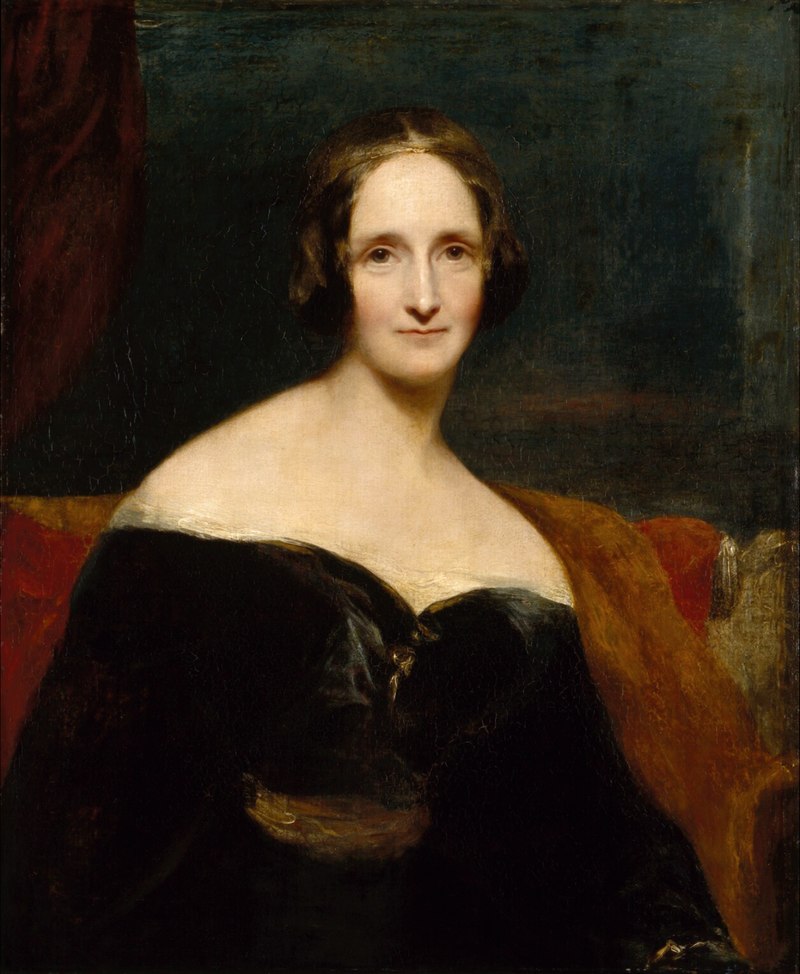
Mary Shelley
While the majority of relevant manuscripts are held at the Bodleian, my last chapter has necessitated a search beyond my institution’s holdings in order analyze popular conceptions of Frankenstein for potential patterns that may account for Shelley’s changes to the 1831 edition. Thus far, I have found that adaptations tend to shift away from the novel’s arguments on promethean creation in in favor of its themes of monstrosity, madness, and hubris. This shift in popular interpretations of Frankenstein parallels Shelley’s changes to the 1831 edition, which both absorbs the adaptations of her work into their source material and attempts to emphasize the disparity between original and copy. Surprisingly, the first stage adaptation of Frankenstein (most likely never performed) was written in 1821 in France. The manuscript of this sole dramatized Frankenstein not even potentially influenced by Richard Brinsley Peake’s Presumption; or, The Fate of Frankenstein (1823) is held in the BNF in Paris. Thanks to the funds provided by the Stephen Copley Research Grant I was able to spend five days consulting this, and two other relevant manuscripts held at the BNF:
cote : MS Taylor-253 (Frankenstein ou Le Prométhée moderne. Mélodrame en trois actes à spectacles, tiré du roman de Mme Shelley)
cote : Rondel-Ms-613 (Le monstre et le magicien)
cote MS-DOUAY-1880 (Le Docteur magicien : pantomime en 1 acte)
Thanks to the Stephen Copley Research Award, I was able to reserve, peruse, and transcribe what the online descriptions gave me to understand were two completed scripts and one brochure. (In actuality, it was one completed script, one incomplete draft of a script never to be completed and one very detailed completed pantomime script, if script is the right word for such a thing). The first, a draft of 24-27 pages depending on what you count as a page of script, is the only direct adaptation of the three consulted documents. Written in August of 1821 it predates the habit that potentially originates with Presumption of making the Creature mute. The choice to skip over the chapters detailing the Creature’s creation and to begin instead after the trial and sentencing of Justine (who is not Justine but cousin Elizabeth, who is not engaged to Victor), results in a first act largely devoted to the Miltonic dialectic between creature and creator lost in later adaptations such as Presumption. The fact that Shelley, who never in her journals or letters criticized this adaptation but did compliment it, did not alter her Creature and the, some have accused, lengthy back and forth between him and Victor in the 1831 edition, suggests the Creature’s ability to speak and his meeting with his creator are integral to her metaphysical system as it emerges in Frankenstein.
The second and third documents, one a drama titled le Monstre et le magician (1826) and the other a pantomime called le Docteur magicien (1880/1881) were most likely never seen by Mary Shelley, but they do illustrate the Faustian tone that readers recognized in her novel and was emphasized in its earlier stage adaptations. As the monster is mute in these adaptations and therefore unable to provide the promise with the devil most easily associated with Faust, the character is augmented by un grande diable daneaux in the pantomime and a genie in the drama. All three adaptations make a point to root Victor Frankenstein’s quest for the principle of life in a desire for fame and glory, a point absent in the 1818 and 1831 editions of the novel but that is often used in summation of its plot: ambition as downfall.
I would like to thank the Award committee again for their support of my research, both financially and through written encouragement beyond the acceptance letter. I encourage everyone to apply and take advantage of this excellent opportunity.
A. Fiona Doxas enjoys what promises to be a lifelong obsession with Mary Shelley and her work. Currently, she is undertaking a DPhil at Oxford titled “‘Embodied Spirit’: Mary Shelley’s Metaphysical System.” It is proving difficult but rewarding.
Amy WilcocksonComments Off on BARS Executive: Secretary Vacancy
Dear Members,
The BARS Executive is looking to appoint a new Secretary, following Jennifer Orr’s election to Vice President. The role will be co-opted in the first instance with the role open to election in the forthcoming round.
Although the role of BARS Secretary is primarily administrative (supporting the business of the Executive, setting up of meetings and circulation of documents and communications from the membership), it is an exciting opportunity to develop a portfolio in the individual’s areas of interest. We would particularly encourage Early Career colleagues to apply as it is an ideal way to become familiar with all aspects of the organisation. As an Officer role, we would hope that the occupant would be keen to shape the role according to their interests and to play a strategic role in the organisation.
The key responsibilities of the role are as follows:
Keeping and verifying minutes of BARS meetings
Liaising with Executive members to arrange 3 annual meetings online (Spring, Summer, Autumn) in consultation with the President and Vice President;
Liaising with the President and Vice President to organise the BARS Biennial General Meeting which takes place at the BARS Conference (chaired by President)
Preparation of Agenda for meetings and liaising with Executive members to procure short reports on each officer’s area of responsibility and to circulate these prior to meeting
Upkeep of BARS archive
Forwarding of queries to relevant officers
Circulating Conference Subvention requests to the Executive for approval and communicating the decision to the applicant
Joining ad-hoc working groups and committees as and when needed
Person specification
Excellent organisational skills
Communication skills
Attention to detail
Desirable experience
Experience of serving committees either inside or outside of academia
Preparation of minutes and other administrative documents
Experience in a public-facing communications role
Please send a one page Expression of Interest and short CV to the BARS Vice President (Jennifer.orr@ncl.ac.uk) and President (mandal@cardiff.ac.uk) by 9 July 2023. We anticipate that candidates will be notified no later than 17 July 2023.
Submissions to the Emerging Scholars Award and the Article Prize are due July 1, 2023. Winners will each receive a cash award of $500 to be presented at the Annual NCSA Conference.
The Emerging Scholars Award
The work of emerging scholars represents the promise and long-term future of interdisciplinary scholarship in nineteenth century studies. In recognition of the excellent publications of this constituency of emerging scholars, this award recognizes an outstanding article or essay published during the author’s doctoral studies or within the six years following conferral of a doctorate. The winning article will be selected by a committee of nineteenth-century scholars representing diverse disciplines. The winner will receive $500 to be presented at the annual NCSA Conference in 2024. Applicants are encouraged to attend the conference at which the prize will be awarded. Entries can be from any discipline and may focus on any aspect of the long nineteenth century (the French Revolution to World War I), must be published in English or be accompanied by an English translation, and must be by a single author. Submission of essays that are interdisciplinary is especially encouraged. Articles that appeared in print in a journal or edited collection in 2022 or between January 1, 2023 and June 30, 2023 are eligible for the 2024 Emerging Scholars Award; if the date of publication does not fall within that span but the work appeared between those dates, then it is eligible. Articles may be submitted by the author or the publisher of a journal, anthology, or volume containing independent essays.
The Article Prize recognizes excellence in scholarly studies from any discipline focusing on any aspect of the long nineteenth century (French Revolution to World War I). The winning article will be selected by a committee of nineteenth-century scholars representing diverse disciplines. The winner will receive a cash award of $500 to be presented at the Annual NCSA Conference. Entries can be from any discipline, must be published in English or be accompanied by an English translation, and submission of essays that are interdisciplinary is especially encouraged. Articles that appeared in print in a journal or edited collection in 2022 or between January 1, 2023 and June 30, 2023 are eligible for the 2024 Article Prize; if the date of publication does not fall within that span but the work appeared between those dates, then it is eligible. Articles may be submitted by the author or the publisher of a journal, anthology, or volume containing independent essays.
Articles submitted to the NCSA Article Prize competition are ineligible for the Emerging Scholars Award and vice versa; only one entry per scholar or publisher for one of the two awards is allowed annually. Nineteenth-Century Studies Association’s Officers, Board, Senior Advisory Committee, and Article Prize and Emerging Scholars Award Committee members are not eligible to receive the award until two years have elapsed since their service.
Amy WilcocksonComments Off on Stephen Copley Research Report: Yu-Hung Tien on John Keats’ Afterlives
Here we have the latest report from Yu-Hung Tien, the most recent winner of the Stephen Copley Research Awards, for more information about how to apply, please see here.
I’d firstly like to take this opportunity to express my deep gratitude to BARS for offering their Stephen Copley Research Awards in support of the continuation and celebration of Romanticism and its ever-evolving legacies. I used the funding to conduct two research trips, which included one to Rome in March and the other to London in May. Through these experiences, I as a first-year PhD student gained more solid contextual knowledge about the doctoral project that I am now working on, and developed a much clearer picture of its future direction.
My project looks at the literary afterlives of John Keats through a less explored transatlantic lens, particularly in Emily Dickinson, Wallace Stevens, and F. Scott Fitzgerald. I was initially fascinated with the ways in which the notions of mortality and immortality are interwoven by Keats. I then started to ponder whether or not Keats might have expected to ‘immortalise’ himself through his words. I was thereafter drawn to his last surviving letter written in Rome, dated 30 November, 1820, to Charles Brown. In this letter, Keats confesses with poignancy if not with a great ambition, ‘I am leading a posthumous existence’. My interests in probing his ‘posthumous existence’ were thereby forged—I have ever since then been keen to explore the ways in which Keats might have been kept ‘alive’ in other writers’ words.
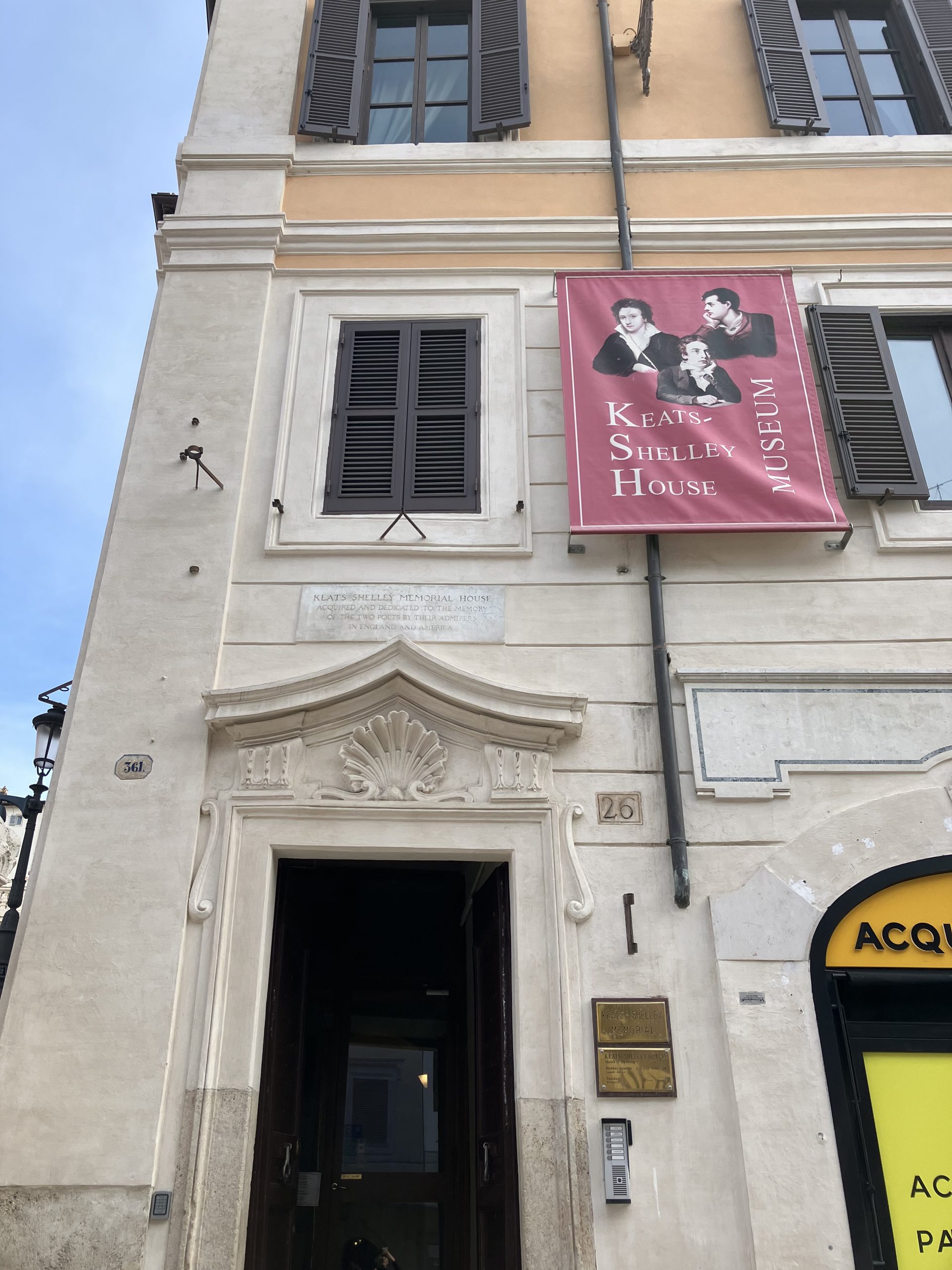
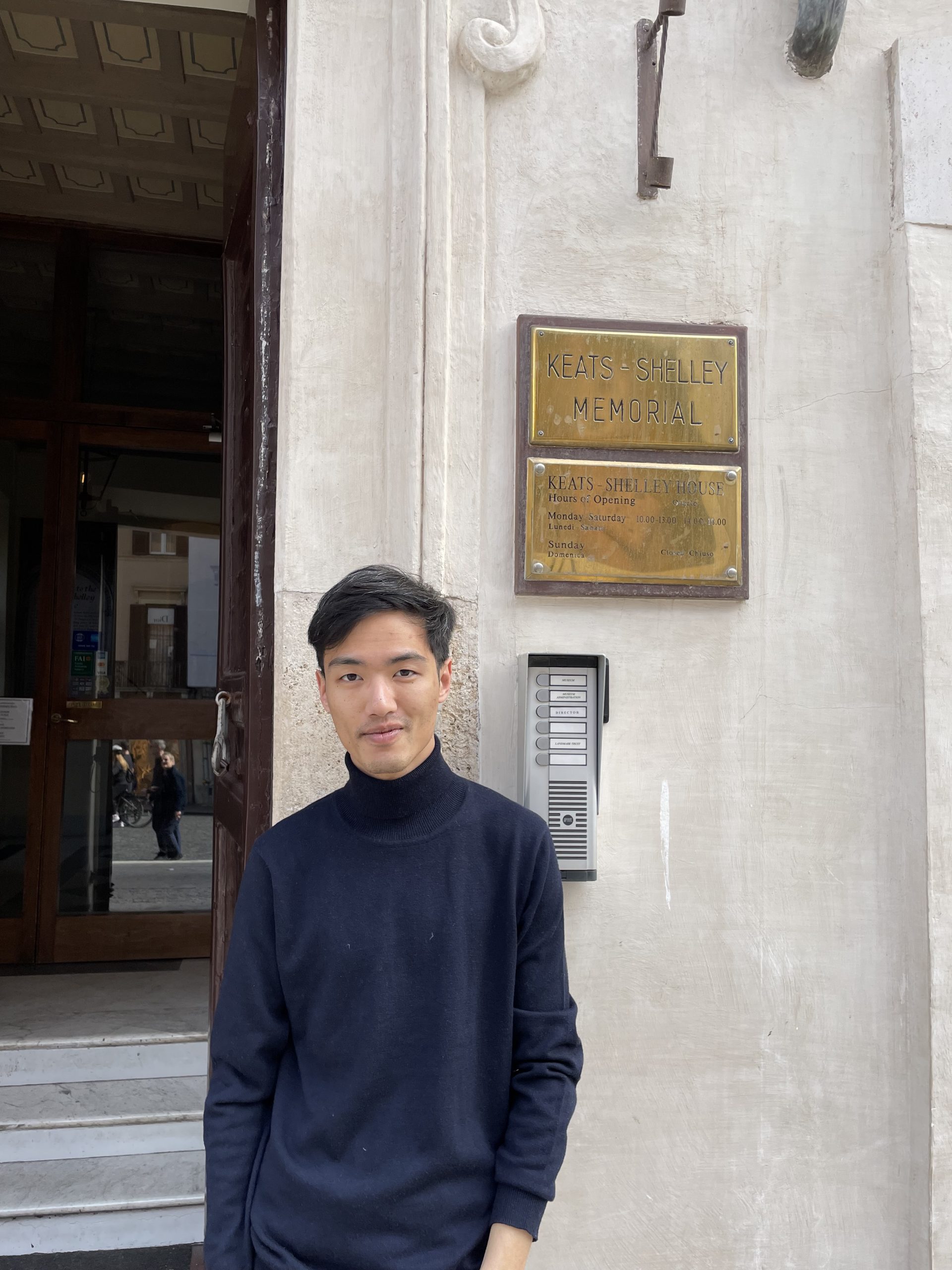
Whereas my thesis’s approach is to look at Keats’s transatlantic legacies—an approach that is less adopted in the existing ‘Keats Reception Studies’—at its preliminary stage, I decided to retrace the ways in which his afterlife started to take shape, which is expected to help lay a solid foundation for my succeeding argument. I thus made up my mind to dedicate my first research trip to Rome, particularly to the Keats-Shelley House, the place where Keats embarked on his path to reach the state of immortality, and now, to review it in hindsight, a starting point from which my research journey departs to immortalise Keats.
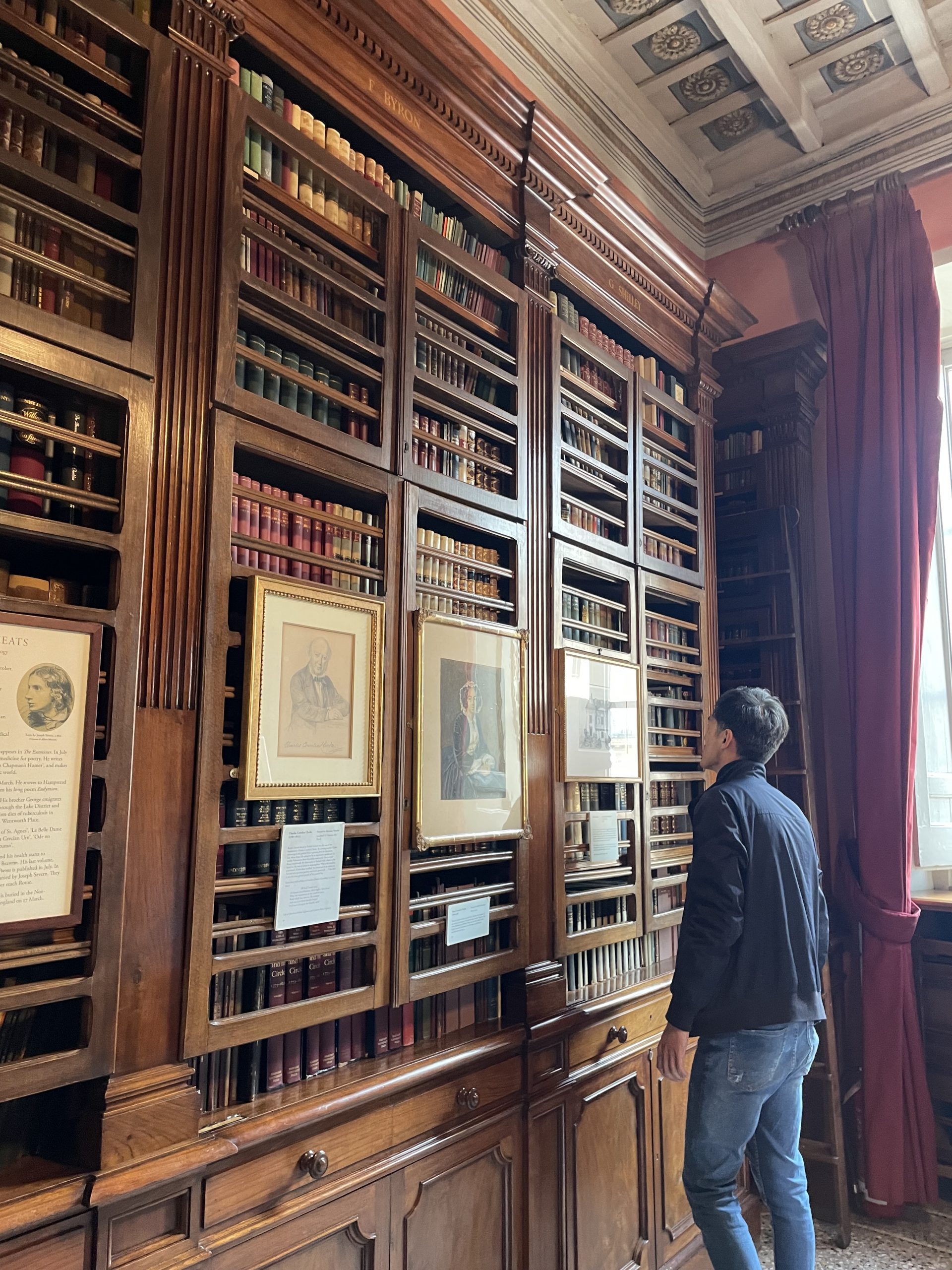
My admiration for Keats’s life and writing was indeed amplified by all the public collections at the Keats-Shelley House. What inspired me the most, however, was an invaluable opportunity with which the Keats-Shelley House granted me to consult a few works stored in their library. All of them are extremely beneficial to my current project. For example, The Poetical Works of John Keats: With a Life (1863) published by Little, Brown and company in Boston that I consulted reshaped my perception of how Keats might have been received in the US in the late nineteenth century. I was particularly drawn to the chapter ‘The Life of Keats’ written by J. H. L., through which I developed a renewed insight into how readers on the other side of the Atlantic might have perceived the ways in which Keats’s ‘intellect was satisfied and absorbed by his art, his books, and his friends’ (19). Another book that I consulted, John Keats: The Principle of Beauty (1948) by Lord Gorell refreshed my approach to Keats’s aesthetics, which will play an important role in some of my close readings.
My second research trip to London was primarily dedicated to my visit to the British Library. Among all the materials that I consulted, I was particularly inspired by A Critical Dictionary of English Literature and British and American Authors from the Earliest Accounts to the Later Half of the Nineteenth Century, Vol. II (1870) by S. Austin Allibone, and the Index of English Literary Manuscripts, Vol. IV 1800-1900, Part 2 Hardy – Lamb (1990) by Barbara Rosenbaum. The former informed me of the critical reviews that Keats received in the long nineteenth century—of which I was not aware—that shape the portrayals and (re)presentations of his reception. Through the latter, I was impressed to see how Keats’s autographs and manuscripts are kept on both sides of the Atlantic. This discovery, on the one hand, enlightened me with an insight suggesting the transatlantic journey that Keats’s poetry has undertaken as not just on a figurative but also on a physical level. It also on the other hand hinted at some future research trips for me to take on the other side of the Atlantic, which would assist me in rebuilding the poet’s transatlantic afterlives in a more comprehensive manner.
As Keats writes in the beginning of his Endymion, ‘A thing of beauty is a joy for ever: / Its loveliness increases; it will never / Pass into nothingness’. To end with my report, I’d like to again express my deep gratitude to BARS for offering this research award. With its support, I gained a clearer idea of the potential pathways for me to undertake in the near future to help complete my current project. More fundamentally speaking, I was inspired by the materials which I consulted during the research trips outlined above. Through them, I developed a refreshing insight into Keats’s poetry. I started to approach it as such ‘a thing of beauty’ bringing me endless joy and inspiration, whose ‘loveliness increases’ and hopefully through my own research ‘will never / Pass into nothingness.’
Yu-Hung Tien is a PhD student at the University of Edinburgh, UK. His research interests lie in Romanticism and its transcultural legacies. His current project explores the afterlives of John Keats from a transatlantic perspective, with a particular focus on the poet’s literary survival in Emily Dickinson, Wallace Stevens and F. Scott Fitzgerald. Yu-Hung has recently published an article in the Symbiosis journal. He is also a Communications Fellow for the Keats-Shelley Association of America (K-SAA).