Final Bars Digi Event: Poetic Form and Biological Form

      Comments Off on Final Bars Digi Event: Poetic Form and Biological Form

This roundtable, Poetic Form and Biological Form, addressed the explosion of experimental ideas about form in literature and the natural sciences in the Romantic period, seeking to generate insight and discussion on questions relating to poetics, biology, botany, epistemology and more. It explored questions of life, form, method, sensation, mind-world relations, and aim to establish connections with current models of emergent, enmeshed, and self-assembling forms to build on the wealth of recent scholarship relating to Romanticism and natural science. Our speakers included Tom Marshall (Queen Mary University of London), Merrilees Roberts (Independent Scholar), Nick Dodd (University of Leeds), Richard C. Sha (American University), Rowan Boyson (King’s College London), and Sharon Ruston (University of Lancaster).

Watch Poetic Form and Biological Form here.

CFP: Transformative Times

      Comments Off on CFP: Transformative Times

Online, interdisciplinary conference

12th and 13th September 2022

The long-eighteenth century was a time of continual transformation. In the two hundred years between 1650 and 1850, rapid urbanisation turned small rural communities into thriving city centres; the Industrial Revolution remade the concept of ‘work,’ and reimagined the notion of progress; serial Revolutions in France, Haiti, Ireland, Greece and across the North and South continents of America berthed new forms of political thought; new literary genres and forms developed and redeveloped; and scientific discoveries and medical advancements catapulted society towards an age of ‘Enlightenment.’

We welcome proposals from all disciplines concerning the long-eighteenth century (1650-1850) with relevance to the theme of ‘transformation.’ We particularly welcome proposals that engage with our brief in unexpected and creative ways. We will accept proposals for 20 minute papers for inclusion in a standard panel format, as well as pre-prepared panels of up to three 20 minute papers.

  • Revolution and political transformation.
  • Transness, queerness, gender, and sexuality.
  • Representations of transformation in literature of the long-eighteenth century.
  • Transformations of literary forms and genres.
  • Spatial transformations (e.g. urbanisation, enclosure, the 1707 Acts of Union, imperialism).
  • Social transformations (e.g. emergence of the middle-class).
  • Scientific discovery and technological advancement.
  • Transformations in fashion, art, and/or architecture.

Please send abstracts of no more than 250 words, along with a short bio, to: cecs-pgforum@york.ac.uk.

Abstract Deadline: 8th July 2022.

Byron: Independence and Integrity

      Comments Off on Byron: Independence and Integrity

NEWSTEAD ABBEY BYRON CONFERENCE

21-22 April 2023

At Newstead Abbey

CALL FOR PAPERS

In July 1823, Byron embarked upon his ill-fated trip to Greece. Although this trip resulted in his death at the age of 36, it also redeemed a somewhat tarnished reputation and forever immortalised him as the poet of liberty and revolution. Instead of a degenerate exile living in jaded Italian debauchery with a menagerie of animals and a string of mistresses, Byron was transformed into a globally-recognised freedom fighter, willing to sacrifice everything to challenge oppression and tyranny. 1823 also saw the continuation of Byron’s provocative and controversial poetic activities with the publication of Heaven and Earth and ‘The Blues’ in The Liberal, the writing of The Island, and the completion of Canto 16 of Don Juan.

The 2023 Newstead Abbey Byron Conference will therefore focus on the themes of independence and integrity in Byron’s life and works. Topics can include but are not restricted to:

  • Byron and Greece
  • Invasion and defence
  • Democracy and despotism
  • Questions of morality and immorality
  • British radicalism and revolution
  • State control and State corruption
  • Byron’s use of non-traditional poetic modes
  • Byron and the Blessingtons
  • Byron and Teresa Guiccioli
  • Byron, Hunt and The Liberal.

Abstracts of no more than 300 words can be sent to Dr Emily Paterson-Morgan (newsteadbyronconference@gmail.com) by 31st January 2023.

Call for Applications: Communications Fellows for the K-SAA, 2022/23

      Comments Off on Call for Applications: Communications Fellows for the K-SAA, 2022/23

The K-SAA is inviting applications for three fellowships.

The fellowships are: two Communications Fellows and one Keats-Shelley Journal+ Fellow (details below).

These fellows will be in post for a period of one year, beginning August 1 2022.

To apply: please send an academic CV and personal statement (1 page) explaining why you are best placed to undertake the duties below to ksaacomm@gmail.com by July 8 2022.

Please indicate in your application which fellowship you wish to apply for.

Fellows will be awarded an honorarium for their time of $1000 USD paid in two $500 installments at the beginning and end of the fellowship term. Working hours and tasks will be flexible in order to ensure a balance alongside other work commitments.

Applicants should be postgraduate or early-career researchers, have a strong interest in Romantic literature, and should have previously used social media for academic/professional purposes. They will be able to demonstrate their ability to write and edit academic blog content similar to what is currently presented on the K-SAA Blog. Experience using WordPress and editing websites is desirable. We’d especially like to hear from applicants who have ideas about how expand our community on Twitter. This post is highly collaborative and you will also work closely with the other fellows as well as the Director of Communications to engage new audiences and present innovative content.

The Communications Team is committed to anti-racist and inclusive practices. The cover letter should indicate applicants’ contributions to diversity, equity, and inclusion as well as their vision for promoting these values within the K-SAA community. We particularly welcome applications from BIPOC scholars

Communications Fellowships x 2

Fellows will assist the Director of Communications and the K-SAA Board in engaging with, and creating content for, academic and non-academic communities interested in the Romantic period – especially those interested in the second generation of Romantic authors. This content will appear on the K-SAA Blog and social media.

Keats-Shelley Journal+ Fellowship x 1

This fellow will also serve as liaison between the KSJ Editorial Team and K-SAA Comms Team. The position will help produce content for the journal’s online presence, including KSJ+, a platform that will supplement and highlight features from the journal’s print version.

Duties may include:

  • To create engaging and informative online content designed to promote the understanding of the lives and works of the Keats-Shelley circles, most broadly understood, as well as those of many others writing in the first decades of the nineteenth century. Fellows will be knowledgeable and passionate about the Romantic period and interested in Romantic-era literature’s intersection with historical phenomena such as the Haitian and French Revolutions, the British empire, and slavery and abolition
  • To set up regular appropriate content for the Twitter and Facebook feeds, applying relevant experience of using social media for professional purposes
  • To respond to enquiries on social media
  • To ensure that social media spaces remain anti-racist and inclusive
  • To use WordPress to publish and edit blog posts for the K-SAA Blog
  • To design and curate these blog posts, including soliciting authors from the academic and non-academic communities and other interested parties
  • To develop the success of the above initiatives and to research further potential developments, and be willing to work independently and to maintain professional communications at all times
  • To attend regular online meetings with the Director of Communications and be able to work collaboratively with colleagues to share ideas and modify technique(s) accordingly
  • To learn and develop individual knowledge of the K-SAA and to create content that supports the association’s aims

Informal enquiries can be directed to Anna Mercer (mercera1@cardiff.ac.uk) and Mariam Wassif (mwassif@andrew.cmu.edu).

Please do get in touch if you have a question!

Stephen Copley Research Awards 2022 (round one)

      Comments Off on Stephen Copley Research Awards 2022 (round one)

The BARS Executive Committee established the Stephen Copley bursary scheme in order to support postgraduate and early-career research within the UK – we have extended this to a second round per year. The bursaries primarily fund expenses incurred through travel to libraries and archives necessary for the applicant’s research, but the remit was this year expanded to include other research-focused costs, such as (but not limited to) photocopying, scanning, and childcare. Please do join us in congratulating the very worthy winners. 

Laura Blunsden (University of Liverpool)

Jessica Fay (University of Birmingham)

Ifemu Omari-Webber (University of Wolverhampton)

Amy Wilcockson (University of Nottingham)

Once they have completed their research projects, as far as the bursary scheme is concerned, each winner will write a brief report. These reports will be published on the website and circulated through our social media. For more information about the bursaries, including reports from past winners, please visit our website: www.bars.ac.uk.

Daniel Cook

Bursaries Officer, BARS

University of Dundee

d.p.cook@dundee.ac.uk

24 June 2022

Archive Spotlight/On This Day 1822- “Remain, thou, thou art so beautiful”: Shelley’s Boat Sketches

      Comments Off on Archive Spotlight/On This Day 1822- “Remain, thou, thou art so beautiful”: Shelley’s Boat Sketches

The BARS ‘On This Day’ Blog series celebrates the 200th anniversary of literary and historical events of the Romantic period, and our ‘Archive Spotlight’ series showcases research projects based in archives and heritage institutions and showcases work with physical or digital manuscripts. Want to contribute a future post? Get in touch.

As we approach the 200th anniversary of the death of Percy Bysshe Shelley on 8 July 1822, we bring you a special Archive Spotlight/On This Day crossover from Laura Blunsden, who explores the relationship between text an images in Percy Shelley’s notebooks held at the Bodleian Library, focusing on the sketch of a sailing boat in his pocket notebook, its relationship with the texts that surround it, and its haunting foreshadowing of Shelley’s upcoming death.

Between translated lines of Goethe’s Faust and his lyrical poem ‘With a Guitar. To Jane’, a sketch of a sailing boat emerging from around a bend in the river Arno fills an entire page of Shelley’s pocket notebook. The sails are filled with an invisible breeze which ripples the water’s surface with thin, wave-like lines, and sways the curly loops of foliage that cover the sloping river banks. Even the tree, which frames the top left corner of the page, seems to lean over the little boat as it passes. The rough, short strokes and inky smudges suggest that the sketch was made quickly, in the open air. It is known that Shelley enjoyed composing his poetry outside; perhaps he sat on the embankment and sketched the boat as it drifted towards him. Below, the stern of the same boat is studied from several angles, each layered one on top of the next, as it floated past Shelley and continued down the river.[1]

Sketches of sailing boats by Shelley
‘Sketches of Sailing Boats by Shelley’, Shelley’s Ghost Project (2010)
Shelfmark: MS. Shelley adds. e. 18, p. 106 rev.
Credit: Bodleian Library, University of Oxford

Yet the sketch is in a relatively finished state compared to many of the other doodles that appear in his notebooks: Shelley took his time to add shading and detail as he enjoyed a moment’s peace in the Italian sunshine. Edward Trelawny would later recall that he found Shelley in this state of ‘bardish reverie’, gazing into the river from the lee of a fallen pine, deep in the forest of the Cascine, one spring afternoon in 1822. A copy of Shakespeare lay nearby, and Shelley’s thoughts still lingered in the atmosphere of The Tempest when he declared to Trelawny that

“In those three pines the weird sisters are imprisoned, and this,” pointing to the water, “is their cauldron of black broth. The Pythian priestesses uttered their oracles from below—now they are muttered from above. Listen to the solemn music in the pine-tops—don’t you hear the mournful murmurings of the sea? Sometimes they rave and roar, shriek and howl, like a rabble of priests. In a tempest, when a ship sinks, they catch the despairing groans of the drowning mariners. Their chorus is the eternal wailing of wretched men.”[2]

Perhaps Trelawny’s memory of the scene was coloured by his knowledge of what was to come, but this vision of impending doom seems to foretell the confusion and chaos into which Shelley’s life would descend in the months following this brief period of relative stability. It creates a striking contrast with the tranquillity of the setting, which is not unlike the one depicted in the boat-sketch. The ‘weird sisters’ imprisoned in the pines, recalling Macbeth’s Three Witches, animate the trees and water as agents of evil. The priestesses’ ominous utterances prophesise Shelley’s drowning in the wreck of his own boat, the Don Juan (which he had preferred to call Ariel), and the lines from ‘Ariel’s Song’ which would be inscribed on his gravestone.

But The Tempest had even more immediate significance: on the very next page after the boat-sketch, ‘With a guitar. To Jane’ figures Shelley as the spirit Ariel, and Jane and Edward Williams as the reincarnations of Miranda and Ferdinand. As these lines seem to have been drafted in the same brown ink as the sketch, they can be dated to the early spring, when Shelley was forming his plan to gift a Pisan guitar to Jane. Along with the guitar, he gave the poem to her, written neatly on a sheet of paper that he had folded into a little booklet, so that he might deliver it into her hands himself, out of Mary’s sight. The series of passionate lyric poems he secretly wrote for her in the months before his death suggest that Shelley’s feelings for Jane had been strengthening since January 1822. He admired her beauty and musical talents, and she offered him affection and comfort, while Mary was struggling with depression following the death of their toddler William. If it had been discovered, their affair could have destroyed their marriages and the peace of their household in Villa Magni, where the couples stayed during the summer.

But for now, sailing on the river and canals surrounding Pisa was Shelley’s favourite way to spend his afternoons. It offered him an emotional, as well as literal, escape from the grief and distress back on the shore. His desire to remain in the present moment, to efface all that has passed and is to come, became more insistent in the last months of his life. In a letter dated 18th June 1822, two hundred years ago today, he wrote to John Gisborne:

[My boat] is swift and beautiful, and appears quite a vessel. Williams is captain, and we drive along this delightful bay in the evening wind, under the summer moon, until earth appears another world. Jane brings her guitar, and if the past and the future could be obliterated, the present would content me so well that I could say with Faust to the passing moment, “Remain, thou, thou art so beautiful”[3]

The Faust quote is significant: it is addressed to the moment of transcendence that Faust has been granted by Mephistopheles in exchange for his instant death and an eternity in Hell. The line must have felt particularly poignant for Shelley, who, like Faust, stands ‘upon a precipice, which I have ascended with great, and cannot descend without greater, peril’.[4] Even as it grasps at the present, the line ebbs into the past and manifests anxieties about the future.

               The lines of Goethe’s Faust drafted on the page before the boat-sketches express the same fantasy:

Through the mossy sods & stones

River & streamlet hurry down

a flood of song, a rushing throng

Beneath the vault of Heaven is blown

Sweet notes of love, the speaking tones

Of this day of Paradise

Resound around beneath above

All we hope and all we love

Finds a voice in the sweet strain

Which wakens hill & wood & vale

And which echo like the tale

Of old times repeats again

(Scene II, lines 51-6, 58-61, 63-4)

Mephistopheles and Faust chant these lines in chorus by as they traverse the desolate Hartz Mountain. The water, the wind, the hill and wood and vale, are all animated by a voice: not the mutters and shrieks of priests and priestesses described to Trelawny, but the stilted repetitions and echoes of unseen witches, whose song ‘Streams the whole mountain along’ (Scene II, line 149).[5]

If the suggested dates are correct, the sketch was made as Shelley’s translation of Faust was nearing completion, and therefore predates little Allegra’s death in May and Mary’s miscarriage in June. The little boats represent a ‘day of Paradise’, which hovered between years of accumulated disappointment and disillusionment, and his remaining few months, marked by despair and deteriorating health. Several sheets before and after the sketch are torn out, but Shelley preserved the leaf with the sketch on it because it accomplished something that the Goethe lines and the Jane lyric could not. For all the movement that is evoked in the drawing, by the sails full of wind and the water rippling into small waves, the sketch halts and holds time in a way that verse cannot. A line of poetry, though it may exclaim against the future, must necessarily move forward onto the next; but the little boat is stilled forever in the pages of Shelley’s notebook.

Laura Blunsden (@blunsden_laura) is a doctoral candidate at the University of Liverpool. She researches mentoring relationships – between authors of, and represented within – eighteenth-century prose fiction. She is also interested in the life and works of Percy Bysshe Shelley, and assists the Shelley200 organisers with their upcoming conference in July 2022


[1] The Faust Draft Notebook: Bodleian SM adds. e. 18, p. 207.

[2] Edward Trelawny, Recollections of the Last Days of Shelley and Byron (1858; Cambridge: Cambridge University Press, 2011), p. 71.

[3] The Letters of Percy Bysshe Shelley, ed. F.L. Jones, 2 vols (Oxford: Oxford University Press, 1964), II, pp. 435-6.

[4] Letters, II, p. 436.

[5] Percy Bysshe Shelley, ‘Scenes from the Faust of Goethe’ in The Poetical Works of Percy Bysshe Shelley, ed. Thomas Hutchinson (1905; revised edition Geoffrey Matthews, Oxford: Oxford University Press, 1970), pp. 748-762 (p. 753 and p. 755).

Bibliography

Barker-Benfield, B.C., Shelley’s Guitar: An Exhibition of Manuscripts, First Editions and Relics, to Mark the Bicentenary of the Birth of Percy Bysshe Shelley, 179–1992 (Oxford: Bodleian Library, 1992).

Holmes, Richard, Shelley: The Pursuit (Weidenfeld and Nicolson, 1974).

The Faust Draft Notebook: adds. e. 18, The Bodleian Shelley Manuscripts, gen. ed. Donald H. Reiman, 23 vols (New York: Garland, 1986-2002) xix, ed. Nora Crook and Timothy Webb (1997).

The Poems of Percy Bysshe Shelley, ed. Geoffrey Matthews and Kelvin Everest, 4 vols to date (London: Longman, 1989-2020) i.

Shelley, Percy Bysshe, The Poetical Works of Percy Bysshe Shelley, ed. Thomas Hutchinson (1905; revised edition Geoffrey Matthews, Oxford: Oxford University Press, 1970).

The Letters of Percy Bysshe Shelley, ed. F.L. Jones, 2 vols (Oxford: Oxford University Press, 1964).

Trelawny, Edward, Recollections of the Last Days of Shelley and Byron (1858; Cambridge: Cambridge University Press, 2011).

Five Questions: Porscha Fermanis on Romantic Pasts

      Comments Off on Five Questions: Porscha Fermanis on Romantic Pasts

Porscha Fermanis is Professor of Romantic Literature at University College Dublin. Her research interests include Romantic poetry and poetics; the relationship between Romanticism and Enlightenment; history and historiography; nineteenth-century colonial material culture; global Romanticisms; and the history of globalisation. She is the Principal Investigator of the European Research Council-funded SouthHem project. Her recent books include Romanticism: A Literary and Cultural History (Routledge, 2016; with Carmen Casaliggi), Early Public Libraries and Colonial Citizenship in the British Southern Hemisphere (Palgrave, 2019; with Lara Atkin et al) and Worlding the South: Nineteenth-Century Literary Culture and the Southern Settler Colonies (Manchester University Press, 2021; ed. with Sarah Comyn). Her latest book, Romantic Pasts: History, Fiction and Feeling in Britain, 1790-1850, which we discuss below, has just been published by Edinburgh University Press.

1) How did you first become interested in what your introduction describes as ‘the complex relationship between feeling and the making of the modern historical method’?

I’ve been interested in historiography for what seems like a long time now, dating back to my 2009 book on Keats and extending to a co-edited collection on Romantic-era history in 2014 (with John Regan). While my interest in feeling is a bit more recent, the role and place of feeling in written history is a long-standing issue in the philosophy of history. There are a number of ways of understanding historiographical shifts over the longue durée, but in nearly all of these explanations feeling has had a significant role to play in history’s changing self-definition. It’s almost a truism at this point to say that the historical writing of the Romantic period saw a deepening of those sympathetic registers that emerged out of late Enlightenment thinking. Ironically, however, my own interest in feeling surfaced from the ambivalence towards sentimental techniques that I discovered in Romantic-era written histories. There is a sense in the historical writing of Mary Wollstonecraft, William Godwin, Walter Scott, Thomas Carlyle, and others that sympathetic identification—while desirable—comes with its own set of ethical problems, including ideological concealment and the complicity between the personal and political. More generally, I was interested in connecting work from the history of emotion, which has demonstrated how modern conceptions of emotion took shape in the nineteenth century, to the writing of history itself.

2) How did you decide to focus on ‘the protocols, norms, and evidentiary claims of “real” history rather than on the novel, memoir, or biography’?  What for you are the most important things we see when we place the spotlight on such histories, rather than on forms like the historical novel?

My decision to focus on ‘real’ or ‘official’ history was partly a pragmatic one. There has already been so much excellent work produced on women’s historical writing and on the historical novel. Mark Salber Phillips has also done a brilliant job of thinking about quasi- and para-historical genres in Society and Sentiment (2000). It seemed to me, however, that some (although by no means all) of this work tended to see official history as an unchanging norm against which innovations in other genres could be mapped or measured. I wanted to think instead about how written history was contributing to, rather than just belatedly incorporating, some of the formal innovations we normally attribute to the novel, memoir, and biography. Putting the spotlight on official history can, for instance, allow us to see how the genre developed new technologies for the staging of historical selves, technologies that emerged as much from Enlightenment faculty psychology and from what I call ‘feeling documents’ as from the novel. By treating written history as (at least to some degree) separable and distinct from quasi- and para-historical genres, I think that we can see more clearly what heuristic models history borrowed from the novel and vice versa.

3) To what extent do you see Romantic-period history-writing as departing from earlier eighteenth-century practices?  What are the main legacies of the period’s approaches for the development of historical writing and the organisation of history as a discipline?

History’s familiar coming-of-age or disciplinary birth story is that professional empirical history emerged only in the second half of the nineteenth century. In Romantic Pasts I focus less on questions of institutional or disciplinary professionalisation and more on the longer and slower processes of differentiation and specialisation internal to genre hierarchies and classifications. While I do not deny that the Romantic period reflects a gradual shift away from eighteenth-century philosophic history towards a more affective and narrative type of history, the legacies of Romantic-era historical writing are, I think, much more closely aligned with the development of the modern historical method than they first appear. For one thing, the archival turn was well and truly under way in the Romantic period, fortified by a revised form of antiquarianism. For another thing, Romantic-era historians had already begun to centre a different conceptualisation of emotion that the traditional empiricist one, a conceptualisation that focused more on the motivational than the affective character of emotions. I suggest that this new conceptualisation of emotion gradually allowed for the objectification of feeling in written history, in the sense that feeling was increasingly seen as an object of historical study rather than just as a rhetorical mode.

4) How did you come to select the groupings of writers around which you structure your chapters (Edmund Burke and Wollstonecraft; Godwin and Carlyle; Scott, Thomas Moore and Robert Southey; Thomas Babington Macaulay and Carlyle; the reviewers for the Edinburgh Review and ‘other organs of “higher journalism”‘)?  Were there other historians you considered including as you refined the plan, but who ultimately didn’t fit with the book’s design?

I could have considered many other historians in more depth in the book. Among them are figures who are perhaps closer to what we would today consider ‘career’ historians: for example, Sharon Turner, Henry Hallam, Francis Palgrave, and John Lingard. If I had centred those historians, the book might have looked very different. It could, for instance, have been structured around more traditional historical sub-categories, such as constitutional history, military history, ecclesiastical history, and so forth. As I started to focus on feeling, however, it became important to me to look primarily at writers who either produced multigenre corpuses or who were directly engaged with the relationship between history and fiction. Within this particular set of histories, a number of alternative thematic categories emerged, such as historical experience, character, and style. I decided to include a final chapter on periodical reviews because it allowed me to think more fully about questions of occupational identity (particularly the distinction between ‘amateurs’ and ‘professionals’) and reception (including the gendering of reception). Even here, however, had I not focused on organs of higher journalism, the chapter would have looked very different since other, less elite types of journals promoted more popular and accessible forms of history.

5) What new projects are you currently working on?

I’ve finally left historiography behind (I think!) and I’m currently finishing a book called Southern Settler Fiction and the Transcolonial Imaginary, 1820-1890. This book posits that the nineteenth-century settler novel, far from being a generic and belated version of metropolitan fiction, can assist us in understanding complex, transitionary modes of settler and migrant cultural identification across and between multiple spaces, thereby disrupting understandings of Angloworld migration as a single long ship voyage from Europe or America. It examines the kind of ‘mobile fiction’ that depicts transient and short-term movement, primarily between colonial Australia, New Zealand, and South Africa but also between the South Pacific, India, Africa, China, and Southeast Asia. Its central premise is that novels that foreground border-crossing or mobility between spaces can enable us to think about how national canons have marginalised mobile communities and naturalised the nation-state itself. My focus in the book is on two themes: first, the ways in which settler novels encode specifically regional spatial imaginaries (Australasia, Trans-Tasman, Oceania etc); and second, representations in settler fiction of imagined noncommunities, marginalised or precarious political subjects, and the historically punishable bodies of convicts, indentured labourers, servants, non-European diasporas, Indigenous peoples, and mixed-race peoples.

New BARS Postgraduate and Early Career Representatives

      Comments Off on New BARS Postgraduate and Early Career Representatives

After reviewing a range of very strong candidates, the BARS Executive Committee is delighted to announce two new BARS Postgraduate Representatives:

  • Cleo O’Callaghan Yeoman (Stirling/Glasgow)
  • Yu-Hung Tien (Edinburgh)

The BARS Executive Committee would like to thank the outgoing Postgraduate Representatives Amanda Blake Davis and Colette Davies, and the Early Career Representative Paul Stephens, for all their excellent work.

We wish Colette and Paul all the best with their future careers and are immensely grateful for their work on a multitude of projects, not least the BARS PG/ECR Conferences.

Amanda Blake Davis will now be stepping into the Early Career Representative role.

The BARS Review, No. 57 (Autumn 2021)

      Comments Off on The BARS Review, No. 57 (Autumn 2021)
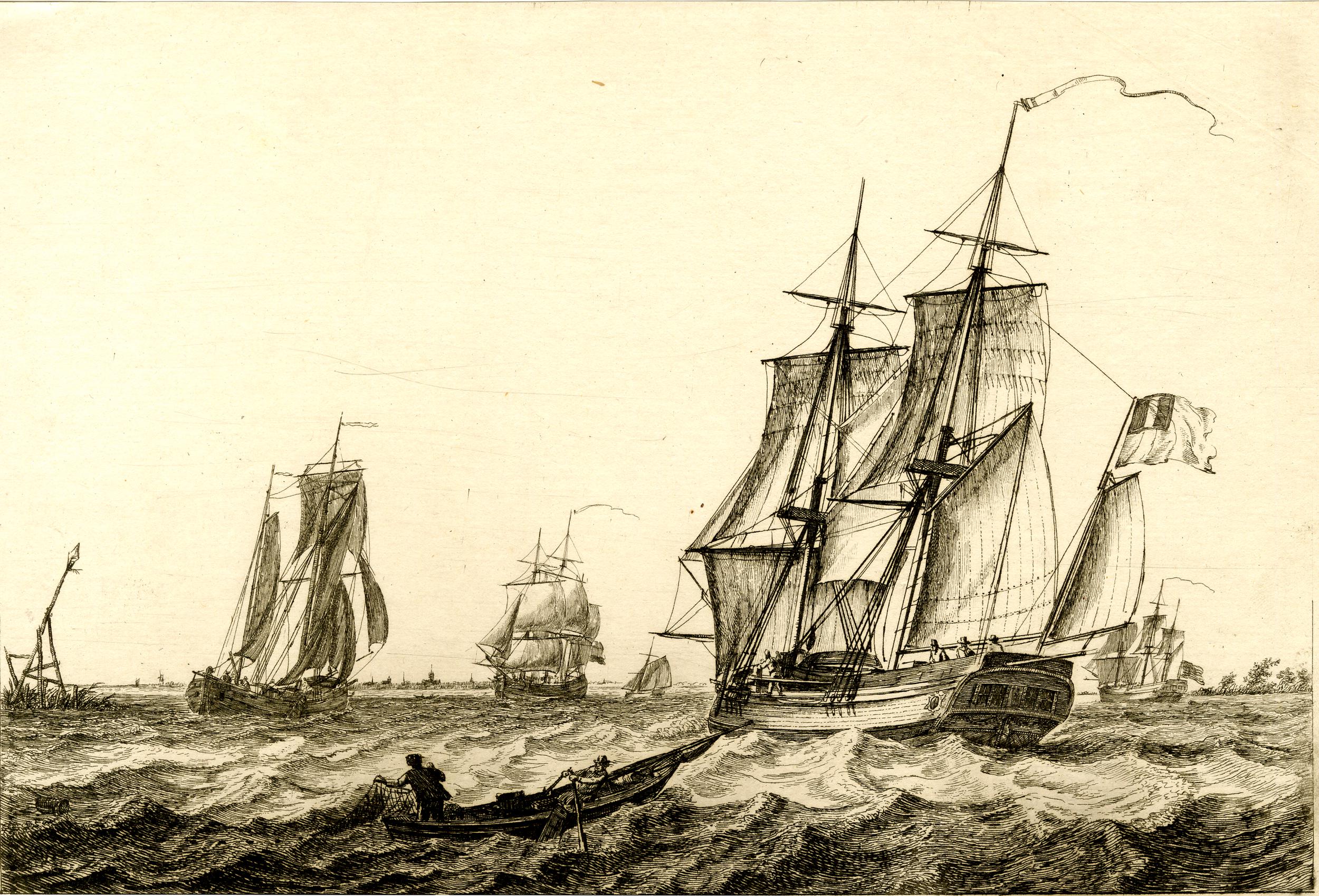
Seascape with a French cargo vessel sailing on a choppy sea at centre, fishing boats beyond, a Dutch coast seen in distance; proof before lettering; before retouchings in the sky (Gerrit van Groenewegen, 1793). © The Trustees of the British Museum. Reproduction used under a Creative Commons CC BY-NC-SA 4.0 license.

We are glad to announce the publication of the most recent issue of The BARS Review (No. 57, Autumn 2021). The issue contains a total of eight reviews of recent scholarly work within the field of Romanticism, broadly conceived, covering twelve works. Five of the reviews comprise a ‘spotlight’ section on ‘Repositioning Romantic Perspectives’.

The individual reviews are detailed below; as always, all reviews are openly available in html and .pdf through The BARS Review website, and a compilation of all the reviews in the number can be downloaded as a .pdf.

If you have comments on the new number, or on the Review in general, we’d be very grateful for any feedback that would allow us to improve the site or its content. Mark Sandy would also be very happy to hear from people who would like to review for BARS.

Editor: Mark Sandy (Durham University)
General Editor: Anthony Mandal (Cardiff University)
Technical Editor: Matthew Sangster (University of Glasgow)

Reviews

1) Ashley Cross on Gillian Russell, The Ephemeral Eighteenth Century: Print, Sociability, and the Cultures of Collecting. Cambridge: Cambridge University Press, 2020.
2) Christine Kenyon Jones on Jane Spencer, Writing about Animals in the Age of Revolution. Oxford: Oxford University Press, 2020.
3) Anna Fancett on Caroline McCracken-Flesher and Matthew Wickman, eds., Walter Scott at 250: Looking Forward. Edinburgh: Edinburgh University Press, 2021 and Daniel Cook, Walter Scott and Short Fiction. Edinburgh: Edinburgh University Press, 2021.
4) Charlotte May on Tim Fulford, ed., The Life of Nelson, by Robert Southey. Abingdon: Routledge, 2021.

Spotlight: Repositioning Romantic Perspectives

5) Peter Francev on Bethan Roberts, Charlotte Smith and the Sonnet: Form, Place, and Tradition in the Late Eighteenth Century. Liverpool: Liverpool University Press, 2019.
6) Jessica Fay on Eliza Borkowska, The Presence of God in the Works of William Wordsworth. Abingdon: Routledge, 2021 and Eliza Borkowska, The Absent God in the Works of William Wordsworth. Abingdon: Routledge, 2021.
7) Eric Lindstrom on Bysshe Inigo Coffey, Shelley’s Broken World: Fractured Materiality and Intermitted Song. Liverpool: Liverpool University Press, 2021 and Merrilees Roberts, Shelley’s Poetics of Reticence: Shelley’s Shame. Abingdon: Routledge, 2020.
8) Jake Phipps on Ian Brown and Gerard Carruthers, eds., Performing Robert Burns: Enactments and Representations of the ‘National Bard’. Edinburgh: Edinburgh University Press, 2021 and Adam White, John Clare’s Romanticism. Cham: Palgrave Macmillan, 2017.