Call for Papers. Anna Letitia Barbauld: Voicing Dissent

      Comments Off on Call for Papers. Anna Letitia Barbauld: Voicing Dissent

27th-28th June 2025

Centre for Eighteenth Century Studies, University of York, and online

Anna Letitia Barbauld (1743-1825) was a poet, educator and polemicist, celebrated after her death as ‘unquestionably the first of our female poets, and one of the most eloquent and powerful of our prose writers’. The year 2025 marks the two-hundredth anniversary of Barbauld’s death and the publication of a new four-volume scholarly edition of her Collected Works by Oxford University Press. We announce a two-day hybrid and interdisciplinary conference which will celebrate these landmarks. This will be the first conference dedicated to Barbauld in over a decade, and will promote and build on important recent developments in Barbauld scholarship.

‘Anna Letitia Barbauld: Voicing Dissent’ will investigate the importance of dissenting thought and feeling for Barbauld’s poetry and prose, and will explore the legacy of her work in much more recent voicings of religious and political dissent. William McCarthy in his landmark biography named Barbauld a ‘Voice of the Enlightenment’; hers was an influential mode of enlightenment, mediated by Dissent.

Barbauld was celebrated during her lifetime as a poet of genius, an innovative teacher and writer for children, and a powerful polemicist, but her reputation was distorted and eclipsed in the nineteenth century and her achievements have only gradually been recovered. Increasingly, scholars have noted the importance of Barbauld’s dissenting identity for her creative and political achievements. She was a member of a Dissenting Protestant community excluded from social and political circles of power, but protested what she termed ‘the mark of separation set upon us’ and used her outsider status – both as a dissenter and a woman – to protest contemporary injustices, and to support the causes of social and political reform, including the abolition of the slave trade. For Barbauld, dissent was not only the source of her civic identity but also of her profound religious faith. New research is now revealing the significance of devotional forms, customs and practices for her creative and political work.

We focus in this conference on the ‘voices’ of dissent in Barbauld’s work. She commanded, in Isobel Grundy’s words, a ‘various set of voices’, and she was acutely attuned to the rhetorical force of the human voice, working in forms and genres designed for vocalisation, from songs and hymns to speeches and sermons. Such voicings were informed by dissenting practices, but Barbauld produced powerfully creative responses to these traditions, and in turn inspired strong legacies of creative and polemical expression in her own lifetime and since.

Our confirmed keynote speakers are: Professor Emma Clery; Professor Elizabeth Kraft; Professor Scott Krawczyk; Professor William McCarthy.

We invite proposals for 20-minute papers and pre-formed panels of three, to be delivered in-person or online. We especially encourage submissions from early-career researchers and independent scholars. To propose a paper or panel, please send an abstract of around 250 words per presentation to barbauld2025@gmail.com before midnight on Friday 1 November 2024.

Possible themes for papers include, but are not limited to:

·      Barbauld’s dissenting life and community

·      Barbauld’s poetics of religious and political dissent

·      Barbauld’s abolitionist and anti-war writings

·      Barbauld’s engagements with devotional forms and practices

·      The oral and aural contexts of Barbauld’s dissent

·      Barbauld’s engagement with her dissenting contemporaries, male and female

·      Nineteenth- and twentieth-century legacies of Barbauld’s anti-war writing and ecofeminist thought

·      Connections between Romantic-era and contemporary literatures of political and religious dissent

·      The limits of Barbauld’s dissent

A small number of bursaries will be available to support attendance by students and early career researchers. Please indicate in your submission if you wish to be considered for a bursary, briefly outlining your case for support.

Organisers: Professor Mary Fairclough and Dr Joanna Wharton

Call for Applications: BARS/BAVS Nineteenth-Century Matters Fellowship 2024-2025

      Comments Off on Call for Applications: BARS/BAVS Nineteenth-Century Matters Fellowship 2024-2025

Royal Holloway, University of London

Outline

Nineteenth-Century Matters is an initiative jointly run by the British Association for Romantic Studies and the British Association for Victorian Studies. Now in its eighth year, it is aimed at postdoctoral researchers who have completed their PhD, but who are not currently employed in a full-time academic post. Nineteenth-Century Matters offers unaffiliated early career researchers a platform from which to pursue their research, while also organising an academic event on a theme related to nineteenth-century studies or a workshop focused on an aspect of professionalisation. The focus of their proposed research should be on the nineteenth century, rather than on Romanticism or Victorianism. There is no requirement for this research to relate directly to Royal Holloway’s institutional specialisms, but areas of interest, in addition to the long nineteenth century, might include: interdisciplinarity; transnational and global connections; temporalities, memory, life-writing; age and disability studies. 

For the coming year, the Nineteenth-Century Matters Fellowship will provide the successful applicant with affiliation at Royal Holloway, University of London. The fellowship will run from October 2024 to September 2025. In addition to intellectual exchange and collaboration, the successful fellow will benefit from: 

  • Access to Royal Holloway’s library resources, both physical and digital, for the duration of the fellowship. These include the University Archives and Special Collections, which hold a wealth of information on the history of women’s education in the institutional records of Bedford and Royal Holloway Colleges, as well as personal papers of alumni from the colleges’ histories. There are also strengths in theatre history and women’s suffrage. Royal Holloway also has one of the largest private collections of nineteenth-century art, held in the University’s Victorian Picture Gallery. This collection includes world-class paintings, sculptures, prints, drawings and watercolours including works by William Powell Frith, John Everett Millais and Edward Burne-Jones.
  • Access to the Centre for Victorian Studies (CVS), which builds on Royal Holloway’s longstanding international reputation for research in Victorian literature, ecology, art, and globalisation. The CVS has 200 cross-disciplinary members, and runs a rich programme of events and training, including the only UK residential colloquium for postgraduates and ECR colleagues in Victorian Studies.
  • Mentorship from Dr Helen Kingstone, Senior Lecturer in Nineteenth-Century Literature and Visual Culture, who can advise on research, careers and publication engagement
  • Free access to the 2025 BARS Early Career and Postgraduate Conference.
  • Access to Royal Holloway’s webinar function to host online events, if desired.
  • Access to room bookings to host in-person events, if desired.

There is no requirement for the Fellow to live near Royal Holloway during the fellowship and accommodation will not be provided as part of the fellowship. The primary purpose of the fellowship is to enable the successful applicant to continue with an affiliation and remain part of the academic community. It is a non-stipendiary post, and the fellow will need to support themselves financially. The value of the fellowship is £1,500. These funds are intended to support the fellow’s research project as they deem appropriate (paying for travel to archives, accommodation, and other research-related costs) and to cover the organisation of a research or professionalisation event related to their own research and/or development interests. It is also expected that the fellow will acknowledge BARS, BAVS, and Royal Holloway in any publications that arise from their position.

Application Process:

Applicants should submit a CV with a proposal of their research topic and event (maximum of two pages), explaining how and why they would benefit from the fellowship. Applicants can propose research on any aspect of the nineteenth century, and we are keen to encourage interdisciplinary proposals which might include, but are not limited to: literature, history, art history, theatre, periodical culture, medical humanities and 19thC legacies. Applications should be sent to Sarah Parker (s.l.parker@lboro.ac.uk) and Cleo O’Callaghan Yeoman (cleo.o.callaghan.yeoman@stir.ac.uk). The deadline for applications is Monday 12th August 2024.

BARS Elections 2024–2026: President and Treasurer

      Comments Off on BARS Elections 2024–2026: President and Treasurer

Please see our previous Blog post for an explanation of the process. 

Two posts were up for election this cycle (2024–2026): President (outgoing: Anthony Mandal) and Treasurer (outgoing: Cassie Ulph). We received two Expressions of Interest for the President position and one for the Treasurer.

Please read the BARS candidates’ statements below. Voting will be open to BARS members from Thursday, 4 July 2024 via email. 

Presidential Candidates:
Andrew McInnes – read Andrew’s statement here.
Matthew Sangster – read Matthew’s statement here.

Treasurer Candidate:
Mary Fairclough – read Mary’s statement here.

President

Andrew McInnes

I am standing for BARS President on a platform of care, community, and collaboration, as demonstrated by my wide-ranging contributions to Romantic Studies, nationally and internationally. I was lead organiser on the joint BARS/NASSR conference 2022, ‘New Romanticisms’, working with the BARS and NASSR Executives from 2018 to plan this event. I have served as BARS Secretary from 2023, organising meetings and working with the Exec to elect PGR/ECR representatives and award bursaries. My Co-Directorship of EHU Nineteen, Edge Hill University’s Research Centre Nineteenth-Century Studies, also demonstrates my commitment to early career support and development in its focus on mentorship and fellowship. Standing for President has led me to reflect on my BARS conference attendance for over a decade. Over this time, BARS has become my academic family (as acknowledged in the forthcoming Reading the Romantic Ridiculous, co-authored with Rita Dashwood) and I would be honoured to serve it as President.

I have written my presidential manifesto alongside a memoir of BARS conferences from 2011 to 2024, completing a circle that starts in and returns to Glasgow.

Enlightenment, Romanticism, and Nation (Glasgow, 2011): For my first BARS conference, I pitched a panel on feminist approaches to nationhood in the Romantic period, responding to a gap in the CFP. We presented in a tiny, packed room in my introduction to the vibrant, exciting world of Romantic Studies! At the conference, I met Mark Sandy who remembers me as a (loud, distinctive) undergraduate he once taught: we have a picnic together!

  • I will continue to identify gaps in Romantic Studies and work with others to fill them – picnicking where possible!
  • I will work with Carmen Casaliggi, our Research and Innovation Officer, to identify and work towards securing national and international funding streams under BARS aegis.
  • Building on my own track record of successful grant capture at various levels, I want to see BARS run funding workshops and related events as part of its digital and in-person offering.
  • I will work with Jeff Cowton, our Outreach and Impact Officer, to align these funding events with public engagement and policy initiatives with an agreed aim to host a BARS Away Day at Wordsworth Grasmere!

Romantic Imports and Exports (Southampton, 2013): I was unable to attend the Southampton BARS because, as a PhD student in my writing up period, I couldn’t afford it, even though I later discovered that the Southampton conference was designed to be as affordable as possible.

  • I will work to support postgraduate, early career, precarious, and alt-academic researchers to attend BARS events and provide space for researchers of all stripes to flourish and develop in Romantic Studies.
  • I will work with Gerry McKeever as Bursaries Officer and our new Treasurer to identify how best to support precarious staff, including events and opportunities for those working outside of conventional definitions of Romantic Studies (with Emily Paterson-Morgan, our Non-Academic Officer).
  • I aim to work with the new Schools Liaison Officer to attract teachers to BARS events as Continuing Professional Development (working with Yimon Lo, our Membership Secretary, to consider ways to attract teachers and other new colleagues into BARS). I would love to work with school students too (building on my experience as former secondary school teacher and more recently co-producing Lake District exhibitions on ridiculous Romantics with students, teachers, and curators).

Romantic Imprints (Cardiff, 2015): I wondered why a group of Romanticists were discussing the North American Space Agency only to slowly realise they were talking about our transatlantic friends and colleagues in NASSR – a dim intimation of my future as BARS/NASSR lead organizer!

  • I will continue to develop international links (which went a little over my head at this conference), maintaining our relationship with NASSR, and forging new connections around Europe and around the world.
  • I will work with Francesca Saggini as International Officer to identify and develop relationships with international colleagues and societies – with an aim to see a BARS conference hosted on mainland Europe!

Romantic Improvement (York, 2017): Our panel went out to a delicious tapas restaurant before we present. I met Rita Dashwood, later my postdoctoral fellow and now co-author extraordinaire, and mentor her about interviews and career development over patatas bravas.

  • BARS will continue to offer career development opportunities for postgraduate and postdoctoral researchers, over tapas where possible.
  • I will work with Kate Nankervis, Zooey Ziller, and Cleo O’Callaghan Yeoman as PGR/ECR representatives to make sure the PGR/ECR conference continues to incorporate career development alongside its growing number of exciting papers and panels!
  • I will support Jennie Orr as Vice President with her plans to develop a mentoring scheme for BARS colleagues.

Romantic Facts and Fantasies (Nottingham, 2019): When I started at EHU, I wanted to pitch us as a location for this conference. Mike Bradshaw, my Head of Department, suggested we needed a record of hosting Romantic symposia – so my trilogy of punning events were born: Edgy Romanticism (2016), Romanticism Takes to the Hills (2017), and Romanticism Goes to University (2018). It’s a fact that my favourite bit of this fantastic conference was its surprise karaoke evening.

  • I will take the lead in presenting Romantic Studies as the embodiment of cutting-edge research in academic and non-academic circles.
  • As demonstrated by the form of this manifesto itself and my experience described below, I love organising conferences but also remain committed to making sure BARS functions as a home for Romantic Studies between biennial events, at the PGR/ECR conference, and beyond.
  • Karaoke should be a recognised element of any BARS conference!

Romantic Disconnections/Reconnections (Online, 2021): I began my continuing attempt to host as many BARS conferences as possible, lending a Zoom room, offering technical support, and chairing a virtual pub session.

  • I remain dedicated to the inclusivity and accessibility of online events!
  • I would expand BARS digital offering to include roundtables and presentations from our Open and Presidential Fellows, as well as the funding workshops and school outreach mentioned above.
  • I will make sure that our initiatives are inclusive and accessible.

New Romanticisms (Edge Hill, 2022): Hosting ca. 250 colleagues on campus and a further ca. 150 online, I became the Bride of Romanticism for four intense days and sleepless nights.

  • I am dedicated to making Romantic Studies a safe and welcoming space for all colleagues, leading from the front to develop an ethos of inclusivity, collegiality, and joy.
  • I look forward to working with the new Review and Website Editors to continue to open up the world of Romantic Studies to new members.

Romantic Making and Unmaking (Glasgow and online, 2024): As Secretary of BARS, I have been liaising with Matt Sangster and Amy Wilcockson especially on the online aspect of the conference – I am very much looking forward to chairing Eugenia Zuroski’s keynote: The daffodils can go fuck themselves!

  • In what I take to be the spirit of Gena’s keynote, I argue that Romantic Studies must show how it is adaptable and active – activist even – in making room for new colleagues, new research, and new perspectives.
  • I present myself as candidate for President to work towards this future with you, together!

If successful, I will use my Presidency of BARS to advocate for Romantic-period research – academic, public-facing, pedagogical, in all its forms! – nationally and internationally.

President

Matthew Sangster

Dear BARS Members,

I am writing to ask that you consider voting for me for BARS President.  I began attending BARS events shortly after beginning my PhD and have cherished the association’s conviviality and openness ever since.  If elected president, I would maintain and enhance the association’s supportive culture while seeking to build new opportunities for members through expanding the association’s collaborations and digital initiatives.

I have a strong record of service to BARS.  I joined the Executive as a postgraduate representative in 2009 and was subsequently re-elected as an early career representative.  In these roles, I co-organised four successful Early Career and Postgraduate Conferences: Romantic Biographies at Keele (2009), Romantic Identities at the Institute of English Studies in London (2011), Romantic Connections at Newcastle (2012) and Romantic Locations at the Wordsworth Trust (2014).  I have attended every subsequent Early Career and Postgraduate Conference, chairing panels, participating in workshops and in one case serving as emergency cover for a member of the organising team.  I’ve learned a great deal from all these events; if elected president, I would continue to attend BARS’ EC&PG conferences to hear from and support early career members.

In 2013, I took on the role of Website Editor, rebuilding the BARS website and founding the BARS Blog, which celebrated its tenth anniversary last year.  While editing the BARS Blog, I established the long-running Five Questions interview series, which provides a platform for Romanticists to discuss their approaches in exciting recent work.

When the costs of posting the old BARS Bulletin & Review became prohibitive, I was asked to come up with an online alternative.  In response, I built the open access BARS Review, for which I have subsequently served as technical editor, completing final preparations for more than 300 reviews.

During the COVID-19 pandemic, I served on the newly established Digital Events Committee to help the BARS community stay connected.  For the past couple of years, I have chaired this committee, seeking to sustain the worldwide connections that the Digital Events programme has fostered.

I have recently served as lead organiser for two BARS International Conferences.  When the pandemic mandated that New Romanticisms be delayed until 2022, I volunteered to chair a free digital conference, working with members of the BARS ExecRomantic Disconnections/Reconnections (2021) involved over 250 Romanticists from around the world, who participated across time zones in a diverse range of inspiring panels, plenary sessions, social meetings and salon discussions.

When securing a venue for the 2024 conference proved to be a challenge, I offered to investigate the viability of a conference at the University of Glasgow.  For the past year, I have been working with colleagues at Glasgow and on the BARS Exec on Romantic Making and Unmaking, which will bring together over 330 Romanticists in Glasgow and online.  For this conference, we are testing a new model incorporating three days of in-person sessions (with social events before and after), two days of live online elements and an archive of submitted recordings that will be available to delegates for a limited time.  Streamlining the conference without compromising the quality of the programming has let us lower the costs for delegates, keeping BARS accessible at a difficult moment for many institutions.

The presidency of BARS is primarily a co-ordinating role.  If elected, I would be keen to ensure that BARS was led collectively by the Executive in consultation with the membership, with my foremost responsibilities being to maintain the core schedule of conferences and events and provide support for current funding schemes and new initiatives.  There are, however, some priorities for the next couple of years that I would like to pursue if elected:

  • Outreach: As a national organisation, BARS is well placed to foster productive relationships with heritage organisations and other institutions, as our successful collaborations with the Wordsworth Trust and Chawton House Library demonstrate.  As President, I would work closely with the Exec to ensure that BARS establishes connections with as wide a range of organisations as possible in order to benefit our members, drive new research and raise the profile of Romantic Studies.
  • Digital Presence: The Digital Events programme has revealed that BARS members’ research has a committed audience around the world.  I would like to continue the existing programme while exploring how BARS can facilitate larger-scale digital engagement opportunities for its members.  I would also like BARS to support a digital symposium on a key research topic in odd years to provide a chance for members to meet between the international conferences.  To co-ordinate this work, I propose instituting a new Digital Events Officer role.
  • Empowering Members: I am keen to provide further means for members to influence BARS policy.  I therefore propose running an open digital Executive consultation every year, to which all members will be invited, and conducting a members’ survey to clarify current priorities and concerns.
  • Ensuring Sustainable Finances: BARS subscription fees have not increased since 2011, but the association has vastly increased the scale of its activities in recent years.  Consequently, we need to consider a modest fee increase and explore whether fundraising from societies or publishers could provide supplementary support for BARS programmes.
  • Constitutional Rework: Digital voting has enfranchised a considerably larger part of BARS’ membership, but the current constitution allows for this possibility only awkwardly.  If elected, I would consult on a reworked constitution in order better to reflect both current practices and members’ priorities for BARS’ future.

In all these things, I would be guided by BARS’ primary aims, ensuring that the association continues to organise inspiring and convivial events; that members receive timely information on new developments; that the next generation of Romanticists are supported in realising their ambitions; and that BARS continues clearly to articulate the importance, diversity and relevance of Romantic Studies.

If you have any questions about my proposals, I’d be very happy to talk – please just drop me an email (matthew.sangster@glasgow.ac.uk).

Many thanks for considering my candidacy, and best wishes,

Matthew Sangster

Treasurer

Mary Fairclough

In my role as Treasurer of BARS, I would aim to provide robust, transparent and responsive financial support for the diverse activities of the society. This is an exciting and challenging moment for BARS, as we make the case for the importance of Romantic literary studies for universities and for broader publics and audiences, and we ensure that the society continues to be an exemplar of inclusive and innovative intellectual work.

I would prioritise flexible and equitable support for the activities of postgraduate and early-career scholars, working closely with the Bursaries Officer to ensure efficient and generous provision for early-career research through the Copley scheme and BARS Fellowship programmes, and providing guidance and support for the BARS ECR conference. I would aim to maximise the fundraising potential of BARS through careful management of membership fees, liaising with the Membership Secretary. I would also investigate possibilities for further fundraising for discrete projects, perhaps in collaboration with partner organisations. I would aim to sustain and to build upon the robust financial and communications systems and procedures established by my predecessor in the role, to ensure strict compliance with financial regulations, and to set BARS on a strong financial footing into the future.

I have been a member of BARS since 2007 and was on the BARS First Book Prize judging panel for 2024. I welcome the opportunity to contribute to the leadership of the society as a member of the BARS Executive. I was a member of the organising committee of the BARS conference ‘Romantic Improvement’ at the University of York in 2017, and have first-hand experience of the financial processes, decision-making, and safeguards involved in delivering a large and complex event for the society. More broadly in my career I have experience of handling the financial processes of grant and fellowship applications and delivery, managing the budget of a research centre, and organising conferences and events. I have a detailed working knowledge of financial processes and systems used at universities. I am keen to put these skills and this experience to work in the service of BARS.

Five Questions: Jacob Lloyd on Coleridge’s Political Poetics

      Comments Off on Five Questions: Jacob Lloyd on Coleridge’s Political Poetics

Jacob Lloyd is a Lecturer in English Literature at Cardiff University. His work focuses on relationships between poetry and politics, as well as questions of influence, transmission and transformation in Romantic-period literature. He has an especial interest in Samuel Taylor Coleridge – recent publications include ‘Political Coleridge’, for the New Cambridge Companion to Coleridge; ‘“Less gross than bodily”: Berkeleian Idealism in “This Lime-Tree Bower my Prison”’ in Romanticism; and ‘The Politics of Superstition in “The Rime of the Ancyent Marinere,” Osorio, and The Borderers in The Wordsworth Circle. His first monograph, Coleridge’s Political Poetics: Radicalism and Whig Verse, 1794-1802, which we discuss below, was published last year by Palgrave Macmillan.

1) How did you come to realise you wanted to write a book on Samuel Taylor Coleridge’s early poetry?

In part it goes right back to my undergraduate studies. I remember that I was reading some articles on Coleridge in preparation for a practice exam at the start of my third year and found that I was rather enjoying doing so. I reflected that maybe I should pursue some further study so that I that could spend more time thinking about Romanticism. I subsequently went to Bristol to do an MA, which allowed me to study the period’s literature more widely (it was during this year I read Don Juan for the first time) and write a dissertation about politics and subjectivity in Coleridge’s poetry.

The doctorate originally had a broader scope, covering Coleridge’s entire career and including Percy Bysshe Shelley, but, as so often happens, I had to narrow the focus in order to explore the topic in the depth that I wanted. The advantage of focusing on Coleridge’s early poetry, though, is that it contains most of his greatest verse. Some of my favourite poems of his, such as ‘Constancy to an Ideal Object’ and ‘Limbo’, belong to a later period, but around three quarters of his non-dramatic verse was written by the end of 1802, so ‘Coleridge’s early poetry’ covers quite a lot!

2) In your introduction, you write that ‘when Coleridge alludes to other poets, he does not merely pay homage or indicate a stylistic preference, but incorporates the ideas of other texts, sometimes in order to repurpose them’.  How integral was this practice of incorporation and reinflection to Coleridge’s poetical and political operations?

I think it was absolutely essential. It is not new to suggest that literary relations are important to Coleridge’s poetry (particularly his relationship with Wordsworth – the subject of monographs by Lucy Newlyn, Paul Magnuson, and Gene Ruoff in the late 1980s alone), but sometimes this kind of approach gives the impression that Coleridge is a slightly secondary figure. Norman Fruman’s Coleridge, the Damaged Archangel (1971) is the most extreme version of such a framing: it is an extremely hostile account that depicts Coleridge as a parasite, utterly dependent on previous verse, and especially on Wordsworth’s poetry. Fruman’s biggest failing, in my view, is that he does not distinguish between different kinds of borrowing: allusion, dialogue, imitation, parody, and other kinds of reworking are all just called plagiarism. One thing I hope I show in my book is how different kinds of appropriation can actually transform a text in creative and distinctive ways. The more I read, the more convinced I am that originality, in the sense of creating something genuinely unprecedented, is vanishingly rare.

When I first read Mark Akenside’s The Pleasures of Imagination, it was a crucial moment for the formulation of my thesis. I immediately recognized Akenside’s poem as a touchstone for Coleridge, the importance of which had been somewhat lost in the two hundred years since Coleridge published his poetry. I was also struck by how explicitly political The Pleasures of Imagination is, meaning that Coleridge’s own metaphysical verse could not but be political when influenced by it. Considering Akenside’s work made me wonder what other contexts I had been missing that could be recovered by investigating Coleridge’s reading. I have tried to reconstruct what a knowledgeable reader of Coleridge’s poetry might have made of it: to identify the allusions and references this reader could have noticed and explore how these connections would shape how they understood Coleridge’s work.

3) To what extent did Coleridge’s politics change over the years on which you focus (1794-1802)?

In some ways the change is quite stark: in 1794 Coleridge was a Unitarian, a republican, an opponent of war with France, and advocating the abolition of private property, but by 1802 he was attacking Charles James Fox for his French sympathies and arguing that property had to be the basis of government. It is only really in the last two years of this period that these views crystalize, though, and even then there was quite a lot of back and forth, particularly regarding the relative merits of a republic vs a monarchy.

There is, though, quite an important difference between Coleridge’s first collection of poetry in 1796 (with a second edition in 1797) and his poetry thereafter. The 1796/1797 collection culminates in ‘Religious Musings’ which is a visionary poem that is clearly part of a radical, Unitarian tradition. It was written during the same period that Coleridge was giving political lectures in Bristol and then editing his own radical newspaper, The Watchman. His verse at this point reflects a belief in direct engagement in political affairs. Afterwards, though, his poetry, especially much of his blank verse, emphasized moral improvement through a relationship with nature instead. This Romantic conception has at times been depicted as a conservative withdrawal from politics, but I see it rather as Coleridge trying to find a different path to the same political ends.

Between 1794 and 1800, then, there is some change, but it is mostly quite subtle. What I was really interested by was the fact that Coleridge does not have some epiphanic moment that converts him, but rather goes through a protracted process of reconsidering his ideas. I’ve argued elsewhere (in a 2022 article for The Wordsworth Circle) that ‘The Rime of the Ancyent Marinere’ is, in part, about reconsidering one’s ideological assumptions in the light of experience. In late 1798, Coleridge was still testing out ways of refiguring his ideals so as to stay true to them.

4) How does recognising the occluded influence of poets such as Mark Akenside, William Lisle Bowles, Thomas Percy and William Cowper help us better elucidate Coleridge’s work?

It recontextualizes many of his poems and highlights quite different implications that they have. Although Mark Akenside was half a century older than Coleridge and writing in a different political context, Coleridge’s adoption of an Akensidean poetics, which uses a particular combination of poetic sublimity and metaphysics in support of a political programme, enabled Coleridge both to present himself in a way that was intelligible to his readership and to transfuse this model with a more radical agenda.

Thomas Percy’s collection of medieval and Renaissance ballads could be deployed as part of a Whiggish belief that British liberty was embodied in an Ancient Constitution bequeathed by their Goth ancestors. The cultural values of the Goths which underpinned this Constitution were supposedly exemplified in and transmitted through the ballads which Percy collected. I argue that Coleridge’s mock-medieval ballads, ‘The Rime of the Ancyent Marinere’ and Christabel, respond to the influence of Percy’s collection not by endorsing this Whiggish myth but by interrogating it. The horrors and chaos of both poems demonstrate the inadequacy of feudal values and systems as a basis for a modern political settlement.

With his older contemporaries, Bowles and Cowper, Coleridge was taking the poetry of people often seen as quite politically mainstream and developing the radical elements within their words. So Fears in Solitude, a poem which is sometimes considered to have loyalist or conservative leanings, has, I argue, important affinities with his more obviously radical work, which become more apparent once the presence of Cowper is recognized fully.

This is how I conceive of Romanticism more broadly: it was a reaction to astonishing events and ideas that were current, but it developed its responses through an eighteenth-century understanding.

5) What new projects are you currently working on?

I am in the early stages of a new project exploring the concept of liberty in Romantic poetry. This has developed from two strands that were important in the Coleridge monograph. The first was finding out that Whigs understood liberty quite differently from how we generally understand it today. For them, liberty was about being part of self-governing state without an arbitrary ruler and was related to classical republicanism. The modern conception of liberty as an absence of restrictive laws has seventeenth-century roots, but gains influence after the French Revolution. The Romantic period is thus a time of transition and I want to investigate the extent to which the Romantics were aware of this contest of meanings and were participating in it. 

The other strand comes from thinking about ‘France. An Ode’, in which Coleridge disclaims finding liberty ‘in forms of human power’ and instead turns to its preservation in the natural world. I argue in Coleridge’s Political Poetics that he is making the case for liberty as needing moral guidance and as being distinct from licence, which is the indulgence of personal desires. What I want to do in this new project, then, is consider the relationship between verse form and different conceptions of liberty and its relationship to licence. Wordsworth occupies much of my attention for this project, but I also want to have chapters discussing Helen Maria Williams, Charlotte Smith, and Lord Byron, with a bit on Percy Bysshe Shelley as well.

Stephen Copley Research Award Report: Rachael McCreanor on Re-Writing Hibernia: Nationalist Women’s Networks in the ‘long’ Irish Romantic Period’  

      Comments Off on Stephen Copley Research Award Report: Rachael McCreanor on Re-Writing Hibernia: Nationalist Women’s Networks in the ‘long’ Irish Romantic Period’  

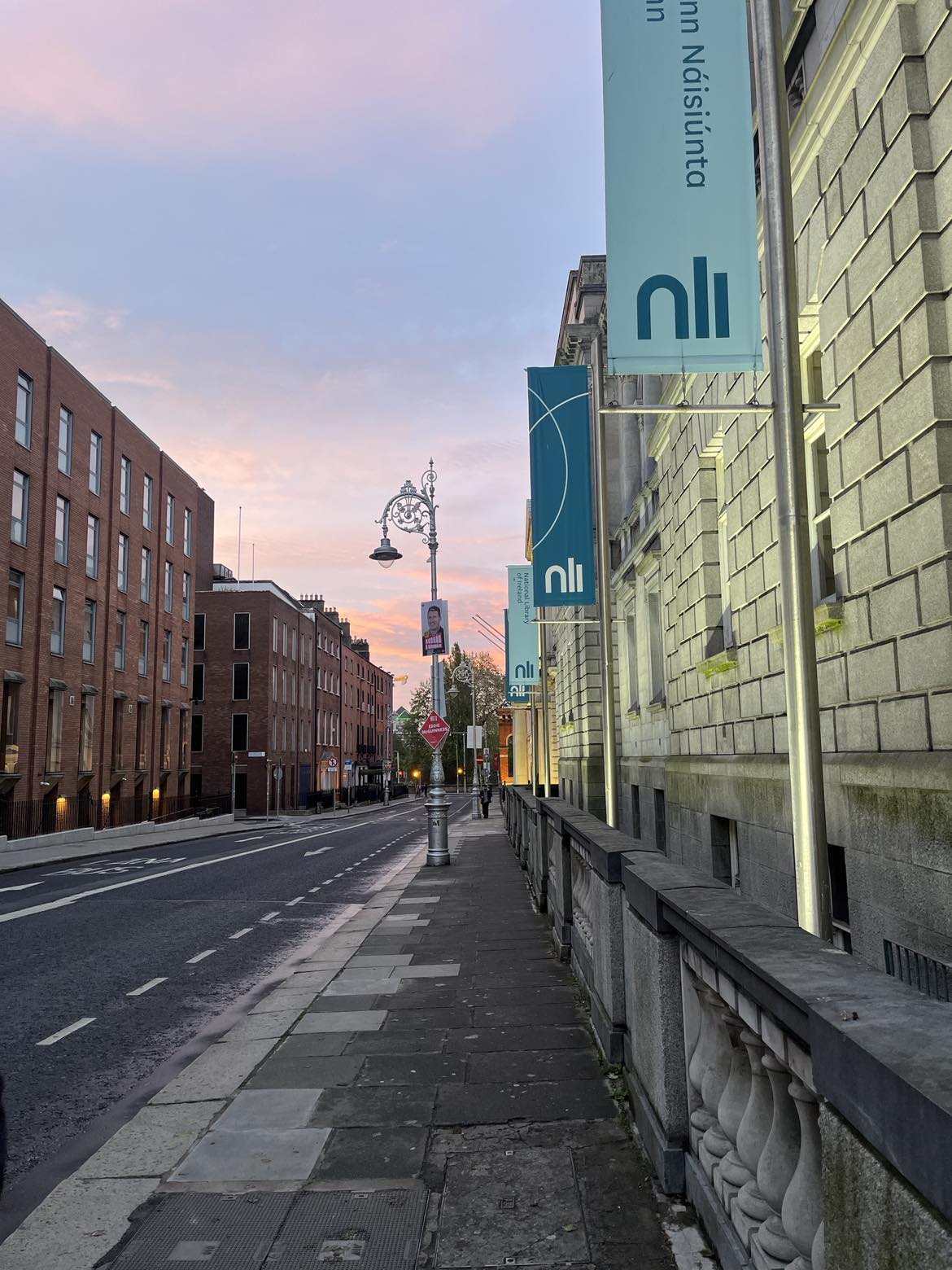
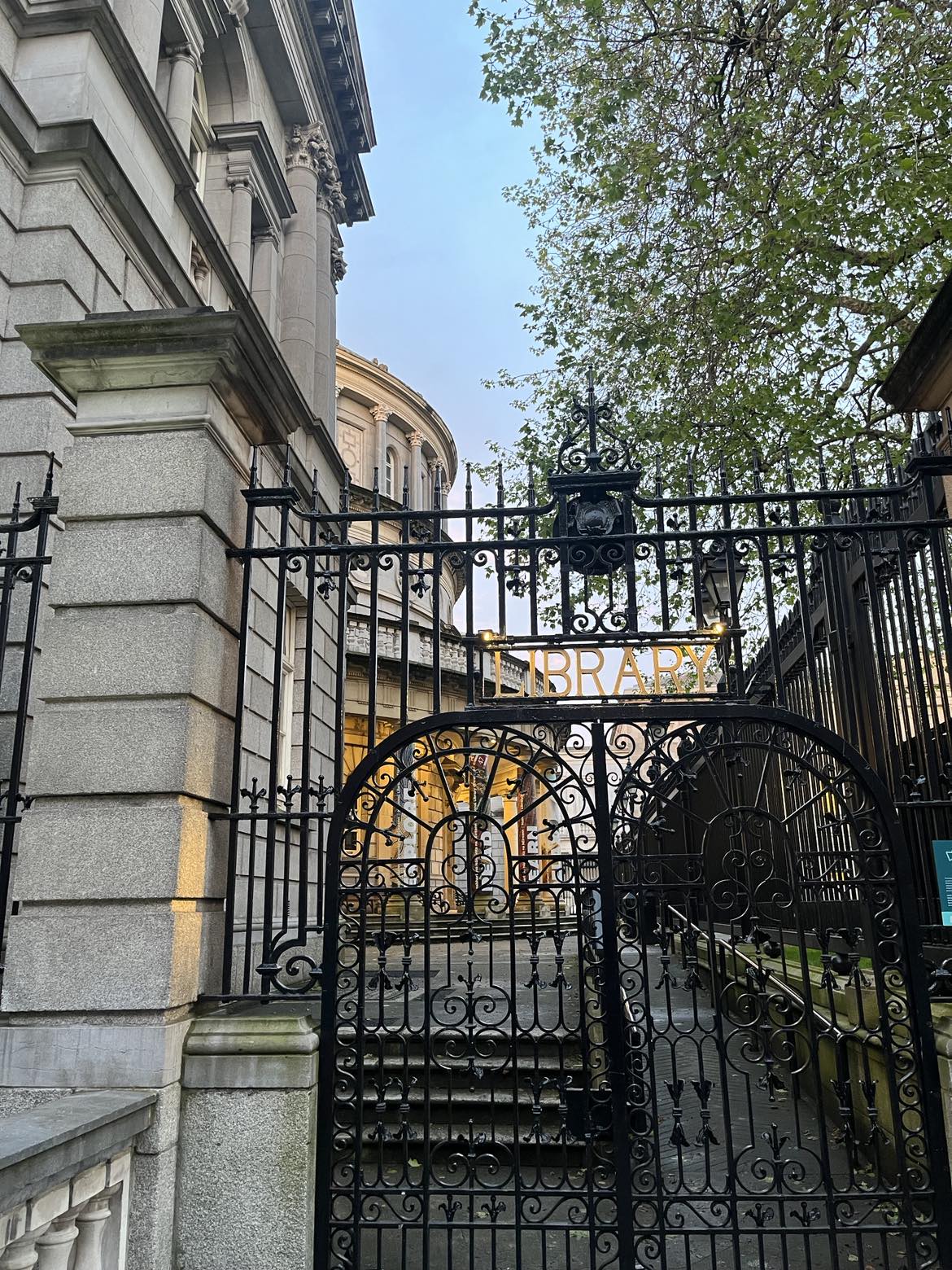
In May 2024, I had the privilege of travelling to the National Library of Ireland (NLI) in Dublin to conduct research within their extensive archives, examining the work of Irish women nationalist writers, their unique networks and the subtle intertextual connections within their works which serve to establish a proto-feminist literary tradition within its own right. I am immensely grateful to BARS for the Stephen Copley Reseach Award which enabled me to undertake this trip and gain access to manuscripts which will prove imperative to my research. My dissertation project is largely dependent on original archival research, therefore this opportunity to make use of the NLI’s unique manuscripts has given me a strong foundation upon which to continue developing my project throughout the summer.  

The drive towards defining a postcolonial Irish national consciousness that was Roman Catholic, politically nationalist, and concerned with ‘the land’ (Corkery, 1924) fostered an exceptionalism which subsequently defined Ireland’s romantic period, largely in opposition to English romanticism, as a late-flowering event propagated by an emergent organic intelligentsia. This has often led to a consideration of an Irish Romanticism that extends in scope from the work of a ‘traditional’ intelligentsia in the late eighteenth century to the emergence in the late nineteenth century of an ‘organic intelligentsia… at the service of the people’ (Eagleton, 1999). My MLitt project re-examines pioneering Irish writer and cultural hub Lady Augusta Gregory (1852-1932) within the context of this ‘long’ Irish Romantic period, alongside the women writers and activists who made up a network of radicalism, intertextuality, and subtlety which challenged the androcentric society in which they lived. 

Gregory’s immense significance within the revivalist movement, the development of late Romantic nationalist literature, and the creation of an enduring Irish mythological canon has, until recently, been overshadowed in Irish literary criticism by the study of the men of her circle, such as W.B. Yeats. I am developing a series of research projects around Gregory’s life and works, analysing her cultural, literary, and political significance to Irish literature. Whilst the well-established field of Irish Literary Revival criticism (Dean, Kiberd) has successfully challenged English influence and developed the idea of an independent Irish canon, much of late twentieth-century criticism in this area takes an androcentric approach to Romantic revivalist projects such as that of Yeats. My project adds to the shift in more recent criticism towards the study of women writers independent of their relationships to their male counterparts (Tiernan, McAuliffe, Morris). I contend that Gregory’s significance in a feminist deconstruction of the canon is integral to the continual development of critical understanding of the Romantic Literary Revival and cultural nationalism. My approach to this project is interdisciplinary, incorporating elements of both New Historicism (Gallagher and Greenblatt, 2000) and Network Theory (LaTour 2005) as a means of understanding the role of women in a literary networks context. So far, this has included research into key female revolutionary networks, radical nationalist newspapers, such as Inghinidhe Na h- Éireann’s Bean na h-Éireann, and the papers of neglected female revolutionaries such as Sydney Gifford and Alice Milligan.  

During my time at the NLI, I split my days between the Manuscript and Microfilm reading rooms, able to avail myself of truly invaluable information unavailable at any other location. I spent a particularly exciting day reading through over twenty issues of Bean na h-Éireann, one of the first ‘feminist’ nationalist periodicals published within Ireland. This paper provided a fascinating example of the role of nationalist newspapers as central hubs for the collective voice of revolutionary women, and as significant facilitators of the communication which enabled the development and expansion of a radical community of women activists. Within my research in the NLI, I aimed to explore some specific examples of how this phenomenon functioned as a method of network formation and political transformation. The life and work of nationalist journalist Sidney Gifford (1889-1974) acts as an illuminating case study of the power of the radical press and it was her papers that I set out to explore. Though a somewhat hidden figure within overall critical understanding of revolutionary Irish women, Gifford’s extensive papers include drafts of broadcasts, articles, and writings on the growth of nationalism in nineteenth-century Ireland which offer unique and illuminating insights into the period. The writings I uncovered within Gifford’s papers add to my understanding of the reasonings and motivations behind the political conversion of middle to upper-class protestant women to political and cultural nationalism during this period. Gifford speaks of the power of the radical press in bringing her into the nationalist movement, further enforcing the idea that the systems of influence connecting, developing and expanding women’s radical networks were specifically gendered and intrinsically linked with the literary sphere. I also had the opportunity to see the papers of Nannie Dryhurst (1856-1930), an Irish journalist, translator and activist. These included several correspondences with fellow female revolutionaries and early diary entries which reveal her as a central figure and hub within nationalist women’s networks. The material I accessed has enabled me to position Dryhurst as a figure akin to Gregory in her connective role within developing networks, acting as an influential reference point for many nationalist women concerned both with the fate of their country, and their gendered experience within this new nation. 

I was also able to access a selection of material from Gregory’s own papers including correspondences, draft manuscripts, essays and scrapbooks of Abbey Theatre reviews and notes curated by Gregory herself. It was such a fantastic opportunity to explore these exciting materials. In particular, the NLI houses several letters between Gregory and Douglas Hyde which included a fascinating essay penned by Gregory exploring her understanding of class and the ‘people’s theatre’. Many of the manuscripts I encountered were not accessible by any other means, therefore without the funding provided by the Stephen Copley Research Award, I would not have been able to access a large portion of the material that will now play a significant role in the development of my dissertation. One of the most exciting drafts I came across was an early handwritten version of Táin Bó Cúailnge, a tale from the Ulster Cycle of Irish mythology which would eventually make up a portion of Gregory’s Cuchulain of Muirthmne (1902). This draft includes the original, Irish sources of Gregory’s translation of the tale, allowing me to explore the translatory changes Gregory employs within her adaptation. The small deviations which often exist in Revivalist translations and transformations of Irish literary tradition make up a significant part of a subtle, yet radical transhistorical network of women writers connected by a shared language of allegory and symbolism which, I argue, forged a rich literary tradition in its own right. 

The material that I was able to access within the NLI will prove instrumental as I enter the final few months of my Masters degree and continue to develop my reading of Gregory’s works within the wider, intertextual networks of radical women writers of the Irish Literary Revival and cultural nationalist movements. Once again, I would like to express my sincere gratitude to BARS for the Stephen Copley Research Award. The experience of engaging with these fascinating texts is one that I am truly thankful for. I look forward to developing my research further and continuing to work within such a rich field of academic study. 

Biography  

Rachael McCreanor is an MLitt English Literature student at Newcastle University, researching radical Irish nationalist women’s writing produced during the Irish Literary Revival (1880-1920). Her research focuses on literary networks, translation and transformation, taking a transhistorical approach to establish a proto-feminist network of intertextual connections. Alongside the presentation of a Stephen Copley Research Award from the British Association for Romantic Studies, Rachael’s research into radical Irish women’s networks has also been recognised through the award of ‘Highly Commended’ in the British Association for Irish Studies’ Postgraduate Essay Prize. Her postgraduate dissertation aims to produce a revisionist reading of the work of Lady Augusta Gregory within this ‘hidden’ network. She hopes to eventually develop this research into a PhD proposal and continue to work within such an exciting literary field.

BARS First Book Prize 2023 – Awardees Announced

      Comments Off on BARS First Book Prize 2023 – Awardees Announced

Judging panel:

Prof Mary Fairclough (York); Dr Yimon Lo (Tübingen and Leuven); Dr Brianna Robertson-Kirkland (RCS and Glasgow).

Chair: Prof Simon Kövesi (Glasgow).

2023 BARS First Book Prize Winners:

Runners Up:

Lindsey Eckert (Florida State University), The Limits Of Familiarity: Authorship and Romantic Readers (Bucknell University Press)

Laura Kremmel (Niagara University), Romantic Medicine and the Gothic Imagination (University of Wales Press)

Honourable Mention:

Jillian M. Hess (Bronx Community College), How Romantics and Victorians Organized Information: Commonplace Books, Scrapbooks, and Albums (Oxford University Press)

Winner:

Stephanie O’Rourke (University of St Andrews), Art, Science, and the Body in Early Romanticism (Cambridge University Press) 

The judging panel would like to thank all entrants to this competition – authors and publishers. We read through and considered so much magnificent work and it was incredibly difficult to choose just these four winners.

To find more information about the BARS First Book Prize, see here.

The BARS Book Prize Panel

CfP: MARIA EDGEWORTH IN PARIS 

      Comments Off on CfP: MARIA EDGEWORTH IN PARIS 

International Colloquium, Friday 13 & Saturday 14 June 2025 

Sorbonne Nouvelle, Paris


Confirmed keynote speaker: Gillian Dow  

(University of Southampton) 

We are now in a magnificent hotel in a fine square  

formerly called “Place de Louis Quinze” – 

afterwards “Place de la Révolution” – and now  

“Place de la Concorde”. In this square the guillotine  

was once at work night and day. Here Louis Seize  

and Marie Antoinette died! … On one side of this  

square are Les champs élysées; where the famous  

courtisanne de l’ancien régime drove her triumphal  

car with horses shod with silver. What a mixture of  

things in this best of all possible worlds! Voltaire  

represented Paris by an image made of mud  

interspersed with precious stones. As far as I have  

seen this seems to be not only an ingenious but a  

just emblem… [Maria Edgeworth, 20 October 1802] 

Background 

The Irish novelist and educationalist Maria Edgeworth spent an intense five months in  Paris from October 1802 until March 1803, travelling there from Ireland with her father,  Richard Lovell Edgeworth, an inventor and man of science who had assisted with a river  engineering project at Lyon in the 1770s and who was already connected with French  scientists, inventors, and intellectuals. The Edgeworths were preparing to settle in Paris  for an indefinite period when Napoleon’s Consulate issued an expulsion order, partly  based on their shared surname with the Abbé Edgeworth, who had administered the  last rites to Louis XVI on the scaffold. Lovell Edgeworth, Maria’s brother, was  subsequently interned at Verdun until 1814. 

Paris was pivotal for Maria Edgeworth. It was here that she first found herself a literary  celebrity in the wake of Practical Education (1798) and Belinda (1801), both of which  had been translated into French. She associated with the Swiss-French Delessert  circle; with André Morellet, Jean-Baptiste-Antoine Suard, Adélaide and Claude Emmanuel de Pastoret, and Marc-Auguste Pictet; met the Benthamite jurist, Etienne  Dumont, and received a surprise offer of marriage from the Swedish scientist and  diplomat Abram Niclas Clewberg Edelcrantz. She went to the theatre and to salons,  and discussed theories of language, Napoleonic politics, literature, science, and  economics. A long and vivid letter written as she began her journey back to Ireland  describes her feelings at meeting Madame de Genlis, whose Adèle et Théodore she had  translated into English as a girl of fifteen.

The 1802-3 sojourn was personally, intellectually and politically significant for  Edgeworth’s subsequent writing. Her personal crisis over the proposal of marriage from Edelcrantz, for example, merged with her intellectual response to Cambacérès’ new  laws governing marriage and divorce. Her subsequent novel, Leonora (1806), bears the  imprint of early Napoleonic-era sexual politics. The connections that Edgeworth made  during her Paris visit continued to be important to her for the next twenty-five years of  her writing career. 

Colloquium 

This colloquium will focus on Maria Edgeworth and her family, and especially on their  stay in Paris in 1802-3, so we particularly welcome papers relating to Edgeworth  herself; but we envisage a wider remit. As a writer and thinker, Edgeworth’s imagination  and analytical powers were deeply engaged with the ideas flowing between France,  Switzerland, England, Ireland, and the Scandinavian and Nordic countries. After 1803,  Edgeworth read voraciously in Francophone literature; her works were translated into  French, Spanish and Italian, among other languages, and her educational thought and  writings for children gained influence across Europe. This transcultural presence and  engagement makes her a figure with whom we can think productively about  transnational networks of ideas. Edgeworth’s contact with various salonnières also  allows us to reflect on the involvement of female thinkers in the supposedly masculine  worlds of politics and law-making. Edgeworth’s fascination with Staël and other French  writers stimulates explorations of the ways in which literature permits the adoption and  adaptation of imaginaries across national borders. 

We invite proposals for 25-minute papers focusing on Maria Edgeworth in Paris  and/or on the related fields of enquiry outlined here. We are also open to proposals  for papers centring on writers other than Edgeworth which amplify our sense of the  individuals, networks, and influences which she could have encountered in France  in the period of the Peace of Amiens and beyond. 

Please send paper proposals (c. 200 words) to: edgeworth-in-paris@sorbonne-nouvelle.fr by the deadline of 1 October 2024.

Website: https://edgeworth-paris2025.wp.st-andrews.ac.uk/ 

Organising committee:  

Isabelle Bour, Sorbonne Nouvelle 

Claire Boulard-Jouslin, Sorbonne Nouvelle 

Susan Manly, St Andrews, UK

BARS PGR and ECR Representatives 2024–2026 Announced

      Comments Off on BARS PGR and ECR Representatives 2024–2026 Announced

Supporting Postgraduates and Early Career Researchers has always been an important part of the remit of the British Association for Romantic Studies. As such, we are thrilled to announce the appointment of two PGR representatives and an ECR representative for the period 2024-2026.

Welcome to Zooey Ziller (University of Cambridge) and Kate Nankervis (University of York), who will take the position of PGR representatives. Zooey and Kate will represent our Postgraduate members and students in the field more generally.

We also welcome back Cleo O’Callaghan Yeoman (Universities of Stirling, Edinburgh, and Glasgow), as ECR representative. Cleo has previously served a successful term as a PGR representative, and will now represent our early career members and early career researchers in the field more broadly.

Thank you to all who applied for these roles – competition was fierce. Thank you too to our outgoing PGR representative Yu-Hung Tien, and our outgoing ECR representative Dr Amanda Blake Davis for their hard work and commitment to BARS over the past two years.

There are also a number of appointments to be made on the BARS Executive in the coming months, as the positions of President, Treasurer, BARS Review Editor, Website Editor, and Schools and Education Liaison are becoming vacant. For more information on these roles, please see the blog post here, and role descriptions here.

HISTORYLAB+ 2024: CONFERENCE REGISTRATION IS NOW OPEN

      Comments Off on HISTORYLAB+ 2024: CONFERENCE REGISTRATION IS NOW OPEN

HistoryLab+, the UK’s national network for early career historians, invites you to the University of Hull’s Wilberforce Institute for the Study of Slavery and Emancipation on 25-26 July 2024 for our annual conference: a space to share cutting edge research, to develop research collaborations, and to find a community.

This event will showcase the wide ranging research being done by early career historians that develops our knowledge of how, historically, humans have exploited other humans—by forcing them to work against their will and/or by opposing fair working conditions—for personal or commercial gain, and these actions’ aftereffects. 

It will include a workshop about how to engage the public with challenging colonial histories in the heritage and arts sectors, featuring the leaders behind Theatre in the Mill’s ‘Bussing Out’ exhibition, the Uncomfortable York Walking Tours, the eCommemoration programme by the Körber Foundation, and Leeds Museums and Galleries’ ‘Devolving Restitution’ and ‘Shifting Perspectives’ projects.

We are also proud to bring together the following keynote speakers:

Prof. Trevor Burnard

Dr Kesewa John 

Dr Danielle Terrazas Williams

Prof. Burnard and Drs John and Terrazas Williams will reflect on the (psychological, institutional, disciplinary, sectoral, cultural, national, any) contexts in which researching and sharing histories of exploitative colonial practices and their legacies now happens, and the role of the early career historian in this picture. 

We aim, also, to provide a supportive, informal forum—at a time when academic labour in the Humanities is under threat, particularly in higher education institutions—for early career historians to share experiences and opportunities.

Please see our dedicated conference webpages for further details, including the full programme and registration form. This is a free event and you can participate in person or remotely. Historians working in any discipline more than welcome!

Call for Expressions of Interest: BARS 2026 INTERNATIONAL BIENNIAL CONFERENCE

      Comments Off on Call for Expressions of Interest: BARS 2026 INTERNATIONAL BIENNIAL CONFERENCE

Deadline: Sunday 1 September 2024

Send your EoI or any questions to the BARS Secretary, Andrew McInnes (bars.secretary@gmail.com)

THE BRITISH ASSOCIATION FOR ROMANTIC STUDIES is pleased to invite Expressions of Interest for the 2026 International Biennial Conference. This will follow our most recent conference, ‘Romantic Making and Unmaking’, held in Glasgow and online in July/August 2024, which itself builds on four successful conferences (Cardiff 2015, York 2017, Nottingham 2019, and Edge Hill 2022 with NASSR). BARS membership and Conference attendance has grown and diversified over the past decade, and from which delegate feedback has been very positive.

Drawing on this momentum, we are very much looking forward to working with institutions in continuing to build on and to diversify the successful BARS model. Please consult the programmes for CardiffYorkNottingham and Glasgow as guides for your proposal. (As a joint BARS/NASSR conference, the Edge Hill conference took a slightly different format than one typical of BARS.) Organizers should note that in order to make BARS more accessible, we have moved to a midweek schedule, typically running from Tuesday to Thursday, with excursions taking place on the fourth day of the conference.

A decision will be made by the BARS Executive in autumn 2024 and the successful applicants will be invited to submit a report for the following Executive meeting. We will aim to announce the 2026 conference shortly after Glasgow 2024, as well as the BARS PGR/ECR 2025 conference, and will promote it on social media.

Host institutions are expected to take account of the following in preparing their Expressions of Interest:

Venue location, capacity and accessibility

We expect numbers could range as high as 250 to 275 delegates: please bear this figure in mind when bidding. You will need a plenary lecture hall large enough to accommodate these numbers, plus a sufficient number of breakout rooms and catering facilities (BARS conferences can normally have around ten parallel sessions). For North American colleagues in particular, the distance from a major airport and transport links will be an important factor, so please bear this in mind.

Organizers should offer a range of accommodation from traditional student-type lodgings through to hotel-level facilities. Sufficient cheaper accommodation to allow postgraduate participation is desirable: such accommodation should be within reasonable walking distance of the conference venue, or the organizers should make suitable travel arrangements to take delegates to and from the venue.

The venue should also meet the usual requirements for facilities in academic meetings, including Wi-Fi and PowerPoint/projection facilities in all rooms. It is desirable that the meeting rooms are in reasonable proximity to each other and that there is a communal meeting area or foyer, preferably with refreshment facilities so that delegates can socialize and browse publisher stands.

In order to comply with BARS’s commitment to equality, diversity and inclusion, conference organizers should ensure that the venue, accommodation and transportation are fully accessible.

Hybrid and/or digital aspects

The COVID-19 pandemic instituted, necessarily, a swathe of changes to how academics gather and share their research. In particular, we were called upon to make use of digital technologies at a remarkable pace and scale. Some of these measures responded directly to the specific conditions in place at the time of events, while others were addressing longer-standing issues of inclusivity and accessibility. One of the major successes of the Edge Hill 2022 conference was its effective use of a hybrid approach to delivering the event, combining both digital and on-campus spaces to maximise access to global participants. Similarly, BARS 2024 will feature an on-campus event hosted by the University of Glasgow in late July, followed by a shorter online conference co-organized with the BARS Executive Committee in early August 2024.

While we expect to continue to see the inevitable return to on-campus conferences, BARS asks proposers to bear the lessons of the past years in mind by considering hybrid elements in their proposed package of events. How this is done is up to the proposers – there could be separate digital and campus-based components, as in the case of BARS 2024, or these could be run concurrently, as for BARS/NASSR 2022. We appreciate that institutions will have differing levels of support in this area, and we will work closely with the conference organizers in developing this strand.

Conference theme

This should be of sufficient scope and significance to allow the Association’s members to take part. Recent themes have been ‘Romantic Imprints’ (2015), ‘Romantic Improvement’ (2017), ‘Romantic Facts and Fantasies’ (2019), ‘Romantic Disconnections/Reconnections’ (2021 online), ‘New Romanticisms’ (2022) and ‘Romantic Making and Unmaking’ (2024). The full list of previous conferences can be found on the BARS website.

Timetable

The conference has typically taken place in the second half of July or in early August, with the conference commencing on the afternoon of the first day by the afternoon of the fourth. However, this is a flexible schedule, and proposers are permitted to deviate from this model. For example, BARS has traditionally run from Thursdays to Sundays, but the 2022 and 2024 conferences ran from Tuesday to Thursday to promote inclusivity.

The BARS Executive normally meet on the evening before the conference begins: organizers will need to arrange a suitable venue for this (two-hour) meeting. The meeting typically concludes with a short tour of the conference venue for the Executive members in attendance. In fixing on a date, it is especially important organizers should check which conferences are already scheduled for what is often a busy time in the calendar and liaise with conference and society chairs in order to avoid clashes wherever possible and facilitate attendance at all events. Conferences which run during summers and are likely to be attended by BARS delegates include those hosted by the British Association for Victorian Studies, the International Conference on Romanticism, the International Gothic Association, the International Society for Eighteenth-Century Studies and the North American Society for the Study of Romanticism, as well as the Coleridge and Wordsworth Summer Conferences.

The CFP is usually circulated by October of the preceding year (2025) and the outcome of the refereeing process confirming speakers is usually made by the middle of January (2026), although recent events have demonstrated flexibility might be required when planning these deadlines.

Vetting of papers

The conference organizers will typically assemble a conference sub-panel for the review of proposals, and should include representation across the organizing institution’s staffing profile, from postgraduate members to members of the professoriate. Details of the composition of the sub-panel should be sent to the BARS Executive. Members of the Executive are available to provide further support or consultation, should the conference organizers wish. (It is desirable that papers are refereed not only for the integrity of the event, but also to help delegates secure financial support from funding bodies and institutions.)

Programme

The programme usually takes the form of parallel sessions consisting of panels where delegates deliver 20-minute papers. BARS welcomes convened and themed panels that reflect cutting-edge projects and collaborative research, and other formats such as roundtables and workshops. Consideration should be given to the mix of formats and how hybrid approaches should complement each other. For example, we found that digital panels in particular worked effectively using a roundtable format, with each speaker presenting shorter papers of up to 10 minutes each.

In addition, there are usually three to five plenary lectures, one of which is designated the Stephen Copley Lecture and another the Marilyn Butler Lecture in memory of BARS’s founding members and much-loved scholars. Plenaries are chosen by the local organizing committee, though BARS expects this to reflect a gender balance, a mixture of national and international scholars, and a diversity of career stages. In the arrangements of the panel sessions and the timing of the plenary lectures the organizers are asked to consider seriously the responsibility of offering all speakers a reasonable size of audience (it is now standard practice to end the conference on the final day with a keynote or a roundtable).

BARS expects panels to incorporate postgraduate and early career researcher opportunities alongside more established academics. The programme should also include specific sessions targeted at professional development for ECRs, which can be developed in conversation with and support from the designated BARS Postgraduate and Early Career Representatives.

Reception, Book Prize, Banquet, PGR/ECR reception

The BARS conference includes a reception (normally on the first night), a slot for the BARS First Book Prize awards (this can be done at the reception or can be separate), and a banquet (usually on the penultimate evening). It has increasingly been the case that informal meals are offered on the second night, although this depends on local factors such as whether the conference venue is campus-based or near a well-provisioned civic centre. Payment for the banquet is optional and can be purchased during registration. There should also be an evening slot for a reception aimed specifically at postgraduate and early career researchers: this typically takes the form of informal drinks and/or dinner, and often runs on the second night but should not be scheduled against the Banquet, in case PGRs/ECRs wish to attend.

Refreshments and lunches 

BARS expects the conference registration fee to include refreshments (before the first sessions each day and regular 30-minute coffee breaks), buffet food for the reception, and lunches on days where the programming falls on both sides of 1pm (one of these can be a brown bag lunch on the excursion day). Please build this into your costs.

Conference excursion

It is usual to arrange an excursion or choice of excursions with laid-on transport within the schedule. This has often taken place on the afternoon of Day 3, and comprised a visit to a ‘Romantic’ venue with general relevance to the conference e.g. a museum, estate, birthplace, gallery. We are keen to explore offering the excursion on another day (e.g. the final day of the conference, or before the main activity of the conference commences), for reasons of inclusivity: e.g. for Glasgow 2024, a full-day excursion will take place the day after the conference closes. The excursion is always an optional extra in terms of costings and can be purchased during registration.

Biennial General Meeting

The conference organizers are required to find a central time (at least one hour, which can be the lunch hour) within the schedule to host the BARS Biennial General Meeting. Key aspects of the BGM are: presentation of reports from the Executive to Membership; introduction of the new BARS Executive for 2026–2028;* presentations on the PGR/ECR conference in 2027 and the announcement of BARS 2028.

*In the past, elections for the BARS Executive Committee were timed to run at the conference BARS BGM; however, since the pandemic we have moved to online elections, which has tended to have better participation by BARS Members. Elections for the 2026–2028 term, therefore, will be held in the later spring prior to the 2026 conference and the BGM will serve to introduce the newly constituted BARS Executive to Members in attendance.

Cost

Organizers are asked to keep costs as low as possible without compromising the quality of the event. Please provide as much information as you can about the predicted registration fee, including a day rate and discounted rates for PGRs, ECRs, retired and unwaged, as well as whether you propose to include discounted ‘early bird’ rates. In order to maximize inclusion, day rates must feature as part of the package offered to delegates, but do not need to be competitively priced against the full package.

BARS is willing to provide an appropriate level of support to its international conference. Any surpluses are expected to be shared 50/50 with BARS. Applicants should include in their proposals a statement from the appropriate management lead in their institution confirming this proposed division of surpluses.

The selection committee strongly encourages proposers to include indicative budgets with projected income and costings, in order to confirm the event’s viability and affordability for delegates.

Liaison

Organizers will maintain contact with the BARS Executive throughout the planning process. This is usually managed by the co-option of a local organizer onto the Executive for a period of two or more years. If feasible, a delegation from the Executive will also make a site visit in 2025 or early 2026 to check through logistics, run through the programme and offer general advice. The Executive will also approve the final programme.